Big Five Animals in Kenya: Meaning and Where to See Them
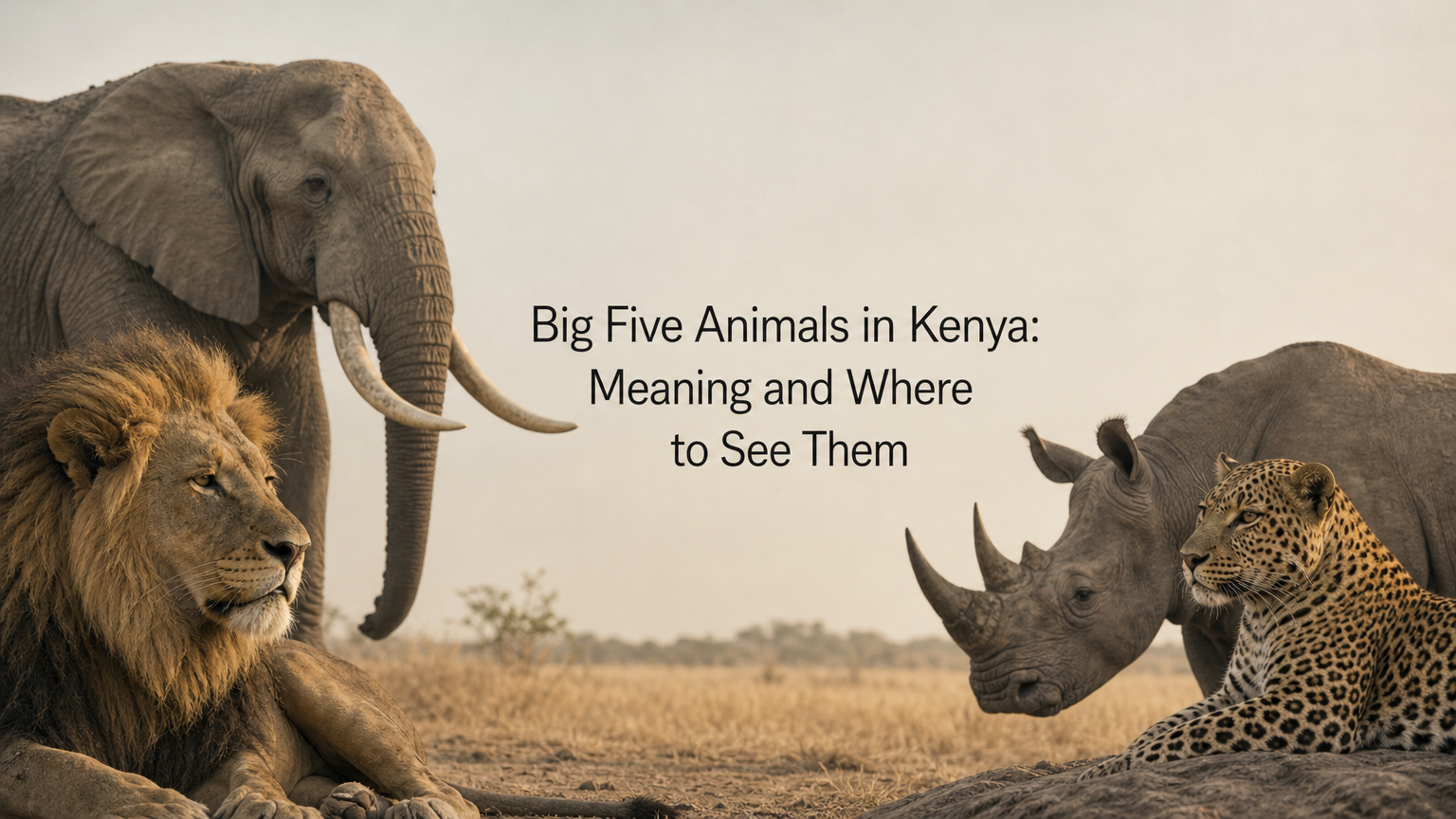
The big five animals Kenya is famous for are the lion, leopard, elephant, African buffalo and rhinoceros. Big-game hunters coined the name in the colonial era for the five species that were hardest and most dangerous to hunt on foot. Size had nothing to do with it, since a giraffe or a hippo is far bigger than a leopard. Today the list works as a safari checklist, and Kenya is one of the few places where you can realistically tick off all five.
That checklist is more useful than it sounds, because the five animals do not live side by side in every park. Rhinos are the scarce ones, and some rhino parks have no elephants at all. Knowing this before you book decides whether your trip delivers all five or only four.
This guide covers the meaning of the term, how each species behaves, the parks that deliver them, and how to plan a route. It comes from Laxa Trails Safaris, a Kenya-based company founded in 2019 by a guide with more than 14 years in the field, so the route advice reflects how these trips run on the ground.
Why the Big Five matter on a Kenya safari
Where the name comes from
The label is a hunting term from the colonial era. Hunters used it for the five animals most likely to turn on a person tracking them on foot, which is why the group includes a buffalo and leaves out the much larger giraffe.
Modern Kenya has reversed the meaning. The five are now flagship species for conservation and tourism, and each one is under pressure. The IUCN lists the lion and leopard as Vulnerable, the savanna elephant as Endangered, and the black rhino as Critically Endangered. A sighting reflects years of protection work, not just luck.
The Big Five began as a list of animals to hunt and now works as a list of animals worth protecting.
What the list changes about your planning
Planning is where the list earns its keep. The five do not share one habitat, so seeing all five is a routing problem, not a matter of luck. Lions and buffalo are common on open plains, leopards favor river woodland, and rhinos live mostly in protected sanctuaries. A sensible route follows three rules:
- Spend most of your days in a park with elephants and big cats.
- Add one dedicated rhino stop.
- Give leopards extra drive time, because they are the hardest to find.
The five animals and what to expect from each
Quick reference
Four of the five are common sights in the right park. The rhino is the one that decides your route. This table sets the animals side by side.
| Animal | IUCN status | Behavior | Best Kenyan parks | Typical difficulty |
|---|---|---|---|---|
| Lion | Vulnerable | Lives in prides, females do most hunting | Masai Mara, Amboseli, Tsavo | Moderate |
| Elephant | Endangered | Matriarch-led family herds | Amboseli, Masai Mara, Tsavo, Samburu | Easy |
| Leopard | Vulnerable | Solitary, stealthy, often nocturnal | Masai Mara, Samburu, Laikipia | Hard |
| Buffalo | Near Threatened | Herds of hundreds, defensive | Masai Mara, Amboseli, Tsavo | Easy |
| Rhino | Black: Critically Endangered, white: Near Threatened | Black browses thickets, white grazes grass | Ol Pejeta, Lake Nakuru, Nairobi National Park | Hard outside sanctuaries |
Kenya has two rhino species, and either one counts as the fifth member of the Big Five.
Behavior that helps you spot each one
Lions rest through the midday heat, so early morning and late afternoon drives are your best windows. Look for a vehicle cluster or circling vultures. Leopards rest in trees along rivers, so scan the branches at dawn and dusk. Elephants are the easiest to enjoy, and Amboseli’s open plains show whole family groups against Mount Kilimanjaro.
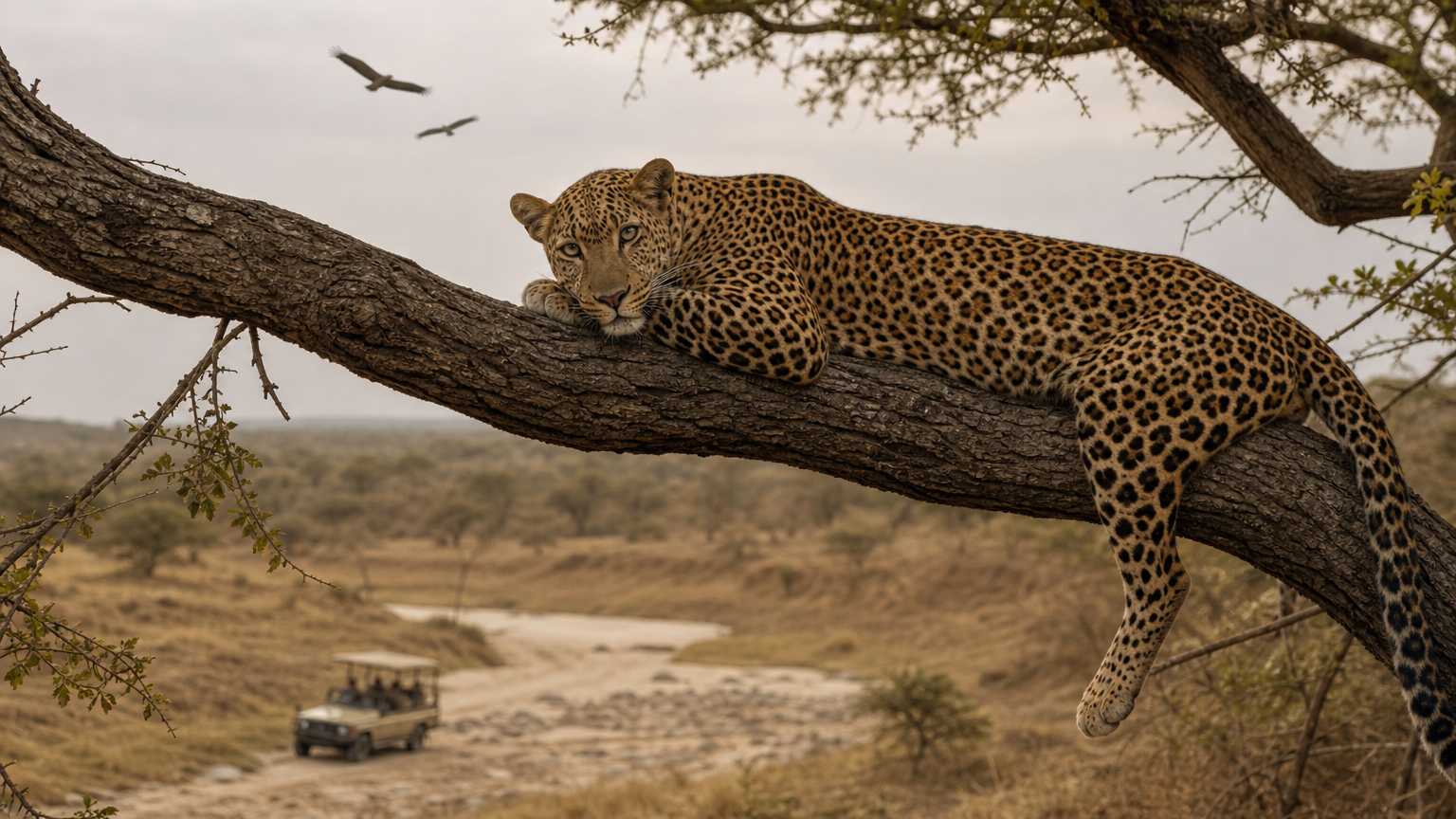
Buffalo deserve respect. Herds look placid, but they are unpredictable, and the old solitary bulls known as "dagga boys" are the ones guides watch most closely. Rhinos see poorly but hear and smell well. Black rhinos are solitary and edgy, while white rhinos are larger and more sociable. Your guide will keep the engine quiet and approach slowly.
Where to see the Big Five in Kenya
What each park offers
No single park is perfect, so match the park to the animals you still need.
- Masai Mara National Reserve: the strongest park for lions, elephants, buffalo and leopards. Rhinos are few here and hard to find.
- Amboseli National Park: large elephant herds with Kilimanjaro behind them, plus lions and buffalo. It is not a rhino park.
- Tsavo East and Tsavo West: big, quiet parks known for red-dusted elephants, buffalo herds and lions.
- Ol Pejeta Conservancy: all five species are present. It holds the largest black rhino population in East Africa and the last two northern white rhinos.
- Lake Nakuru National Park: reliable for rhinos, with lions, leopards and buffalo. It has no elephants.
- Nairobi National Park: lions, rhinos and buffalo minutes from the capital, so it suits a short stopover.
- Samburu National Reserve: excellent for elephants and leopards along the river.
Choosing when you can only pick one or two
If you can visit only one park, Ol Pejeta Conservancy is the closest thing to a one-stop Big Five, though leopards remain elusive there. If you want the richest predator viewing and the wildebeest migration, the Masai Mara is the draw, but you will need a second stop for rhinos.
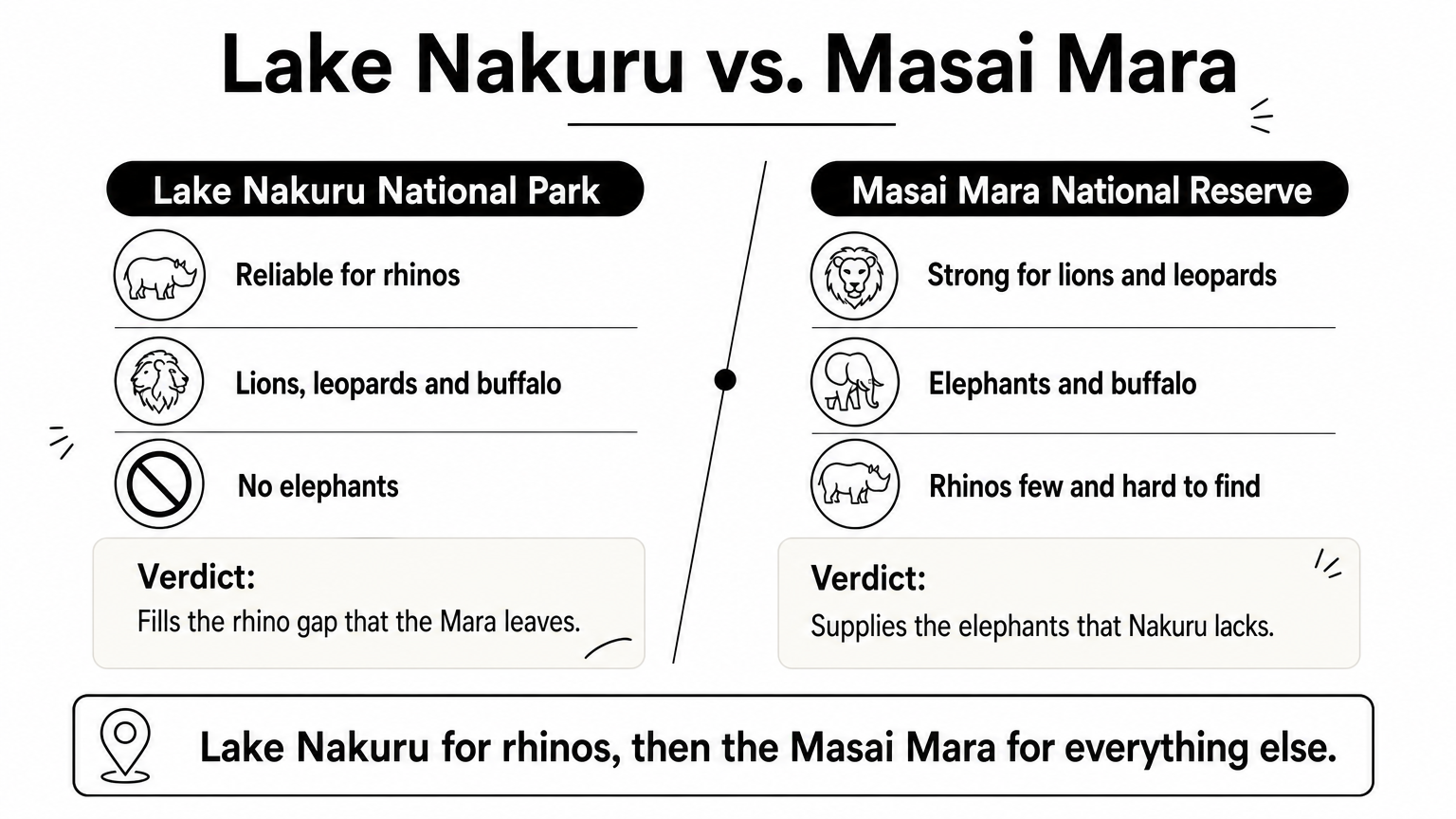
The classic pairing is Lake Nakuru for rhinos, then the Masai Mara for everything else. Nakuru fills the gap that the Mara leaves, and the Mara supplies the elephants that Nakuru lacks.
For a single park choose Ol Pejeta, and for the best odds across a trip pair Lake Nakuru’s rhinos with the Masai Mara.
How to plan a trip that finds all five
Timing and trip length
Aim for the dry season from June to October, when animals gather near water and the grass is shorter. The wildebeest migration reaches the Masai Mara from roughly July to September, which adds drama. The green season brings fewer crowds and lush scenery but harder viewing.
Allow at least four days if you want all five. Three days can cover lions, elephants and buffalo well, but a rhino stop usually needs its own day. Choose a vehicle with a pop-up roof, so you can stand and photograph, and ask your guide to start drives at first light.
Sample routes compared
Here is how several Laxa Trails Safaris trips map onto the five animals.
| Trip | Length | Price | Where the Big Five come from |
|---|---|---|---|
| Nairobi National Park Day Tour | 4 to 5 hours | See trip page | Lion, rhino and buffalo near the city |
| 3-Days Masai Mara, Lake Naivasha Budget Safari | 3 days | $650 | Mara game drives, rhinos are rare there |
| 4 Days Ol Pejeta Conservancy & Lake Naivasha | 4 days | See trip page | Ol Pejeta for rhinos and the rest |
| 5-Days Big Five Kenya Safari | 5 days | $1,460 | Nakuru rhinos, then the Mara |
| 5-Days Naivasha, Hell’s Gate, Nakuru, Maasai Mara | 5 days | $1,765 | Same logic, plus Hell’s Gate |
Take the 5-Days Big Five Kenya Safari as a worked example. It runs from Nairobi through Lake Naivasha and Lake Nakuru National Park to the Masai Mara, so the rhino stop and the predator days are both built in. The price is $1,460, down from $1,550, a saving of $90. It includes park fees, transport, a driver-guide, accommodation, meals and bottled water. International flights, Kenya visa fees, travel insurance and tips are extra, so budget for those separately.
Pair a rhino park with a predator park, and four to five days gives you a fair chance at all five.
Beyond the Big Five: what else to look for
Other species and regional lists
The Big Five leave out many animals that are just as rewarding. Cheetahs, giraffes, zebras and hippos reward patient drives, and the Nairobi National Park day tour covers many of them in a few hours. In the north, Samburu has its own "Samburu special five": Grevy’s zebra, reticulated giraffe, Somali ostrich, gerenuk and beisa oryx. Our 5-day Ol Pejeta and Samburu honeymoon safari pairs the Big Five with that northern list.
The little five
Guides also point out the "little five": the ant lion, leopard tortoise, buffalo weaver, elephant shrew and rhinoceros beetle. They are named to echo the Big Five, and they teach you to look closely at the bush.
Treat the Big Five as a starting point, not a scorecard. A leopard that you wait twenty minutes for is a better memory than a rushed tick on a list. Ask your guide to stay with an animal when something interesting is happening.
The best safaris use the Big Five to choose a route, then leave time for everything else.
Planning your own Big Five safari
The Big Five are the lion, leopard, elephant, buffalo and rhino, a hunting term that Kenya has turned into a conservation symbol. Seeing all five comes down to routing: one park for elephants and big cats, one sanctuary for rhinos, and enough days in the dry season to give leopards time.
If you want a route built around those animals, talk to Laxa Trails Safaris about a Big Five safari in Kenya. Share your dates and budget, and the team can tailor the itinerary to what you most want to see.