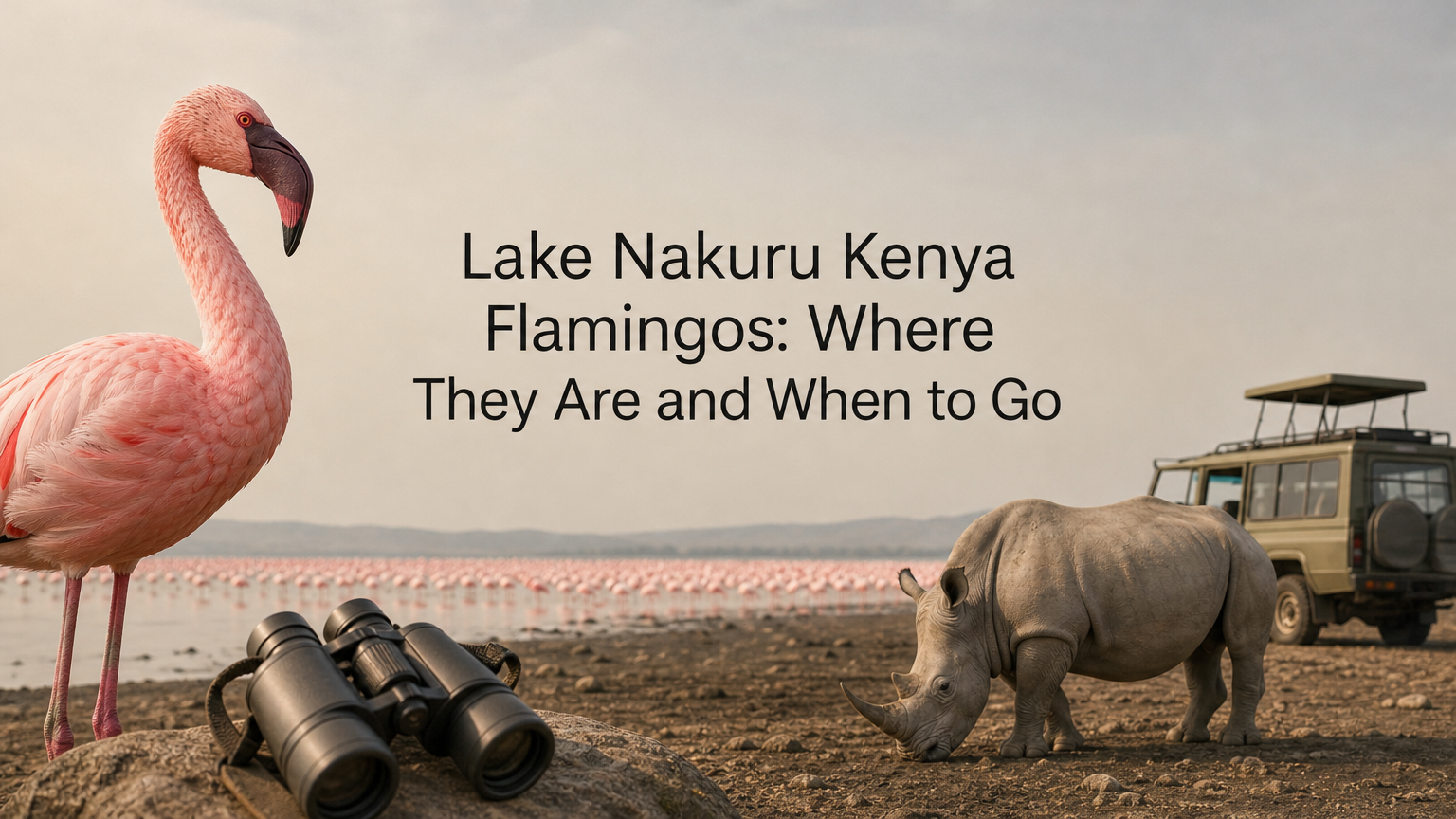
Lake Nakuru Kenya Flamingos: Where They Are and When to Go
Lake Nakuru Kenya flamingos are the lesser and greater flamingos that feed on the algae of a shallow soda lake in the Rift Valley, and yes, some are still there. What has changed is the size of the flocks. Visitors once saw a pink band across the water, with up to two million birds at the peak. Today you are more likely to see thousands, and sometimes only a scattering. The birds are nomads, and they move between lakes as the water changes.
This article explains why the flamingos matter, how many remain and why the numbers shifted, and how to see them when you visit the park. It also covers which other Kenyan lakes to check if Nakuru is quiet. You will leave knowing what to expect, so you can plan around it instead of relying on old photos.
Laxa Trails Safaris is a Kenya-based company founded in 2019 by a guide with more than 14 years in the field. Lake Nakuru National Park is a stop on several of its itineraries. The advice below treats flamingos the way a guide does: a spectacular bonus, never a promise.
Why the flamingos of Lake Nakuru matter
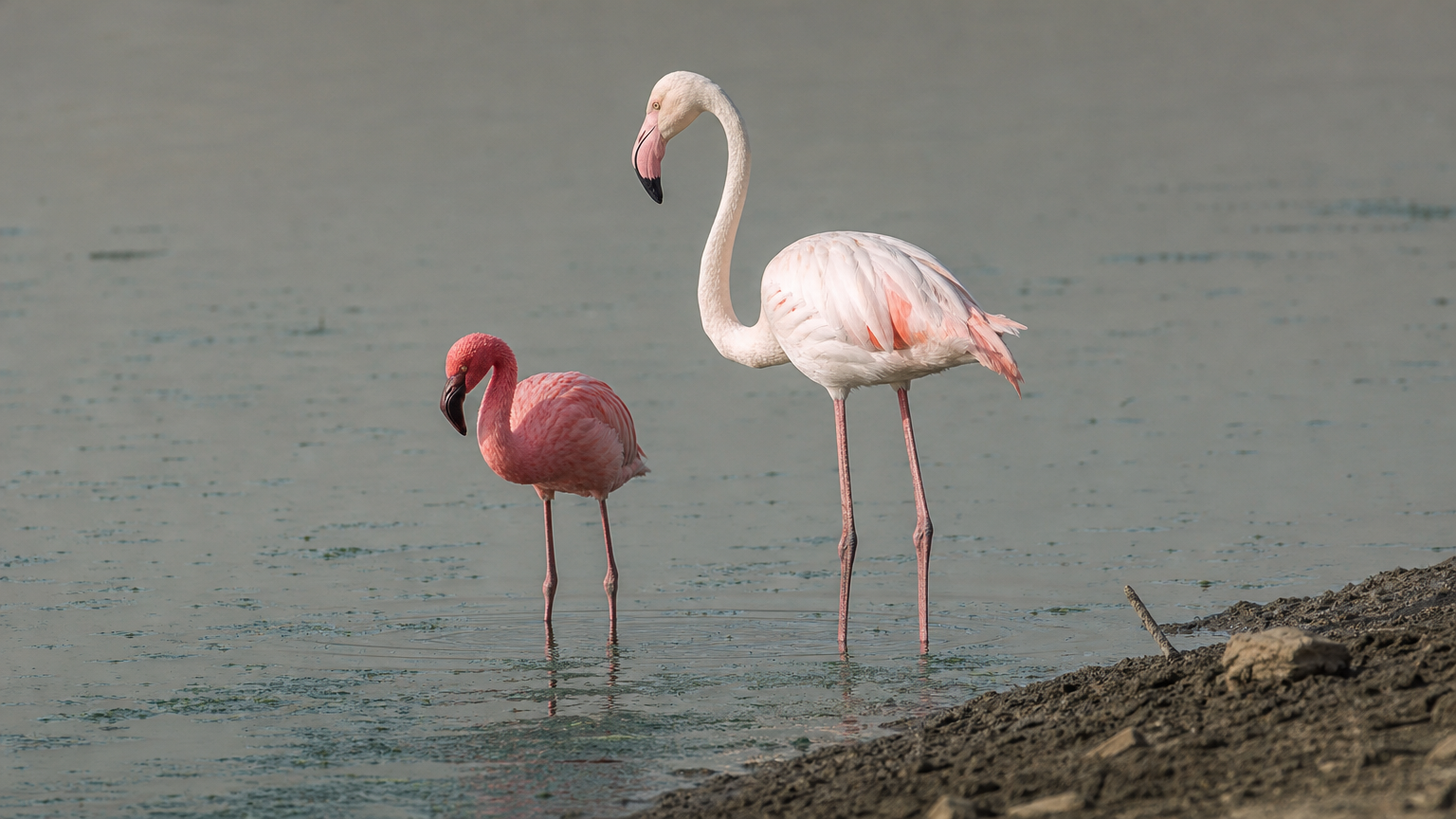
Two flamingo species live at Lake Nakuru, and the deep pink in the famous photos comes mostly from the lesser flamingo. The greater flamingo is taller and paler, and it is usually present in smaller but steadier numbers.
Two species that share the lake
The table shows how to tell them apart and why they react differently when the lake changes.
| Feature | Lesser flamingo | Greater flamingo |
|---|---|---|
| Size and color | Smaller, deeper pink | Larger, taller, paler |
| Beak | Deep red with a black tip | Light pink with a black tip |
| Food | Floating blue-green algae (Arthrospira) | Crustaceans and other invertebrates from the mud |
| Where it feeds | Open, shallow alkaline water | Often along the shoreline |
| Global status | Near Threatened | Least Concern |
East Africa holds the world’s largest population of lesser flamingos, which is why a handful of Rift Valley lakes carry so much weight for the species. Lake Nakuru National Park was set up to protect the flocks, and the lake is a Ramsar-listed wetland. Even without flamingos, more than 400 bird species have been recorded here.
What the flocks tell you about the lake
Flamingos are not residents. They are nomadic specialists that follow food, and their food is algae that only thrives when the water has the right salinity and depth. A flock arriving or leaving is a measurement of the lake’s chemistry, not a verdict on the park. Lakes Nakuru, Bogoria, Elementaita and Natron work as one linked system, and the birds move between them.
A pink lake means the water suits the algae, and an empty shore means the flamingos are feeding somewhere else.
How many flamingos remain at Lake Nakuru
Lake Nakuru now holds thousands of flamingos at best, far below the hundreds of thousands to millions of earlier decades, and the count can change within a single season.
What has been recorded over time
The figures come from different sources and counting methods, so read them as orders of magnitude rather than exact tallies.
| Period | What was recorded |
|---|---|
| Several decades ago | Up to 2 million lesser flamingos, perhaps a third of the world population |
| Year 2000 | Over 850,000 flamingos |
| 2013 | Water levels rose rapidly, and many flamingos moved to Lake Bogoria |
| 2017 | Some birds returned, in the thousands |
| June 2019 | Over 1 million flamingos recorded at Lake Bogoria |
Why the numbers shifted
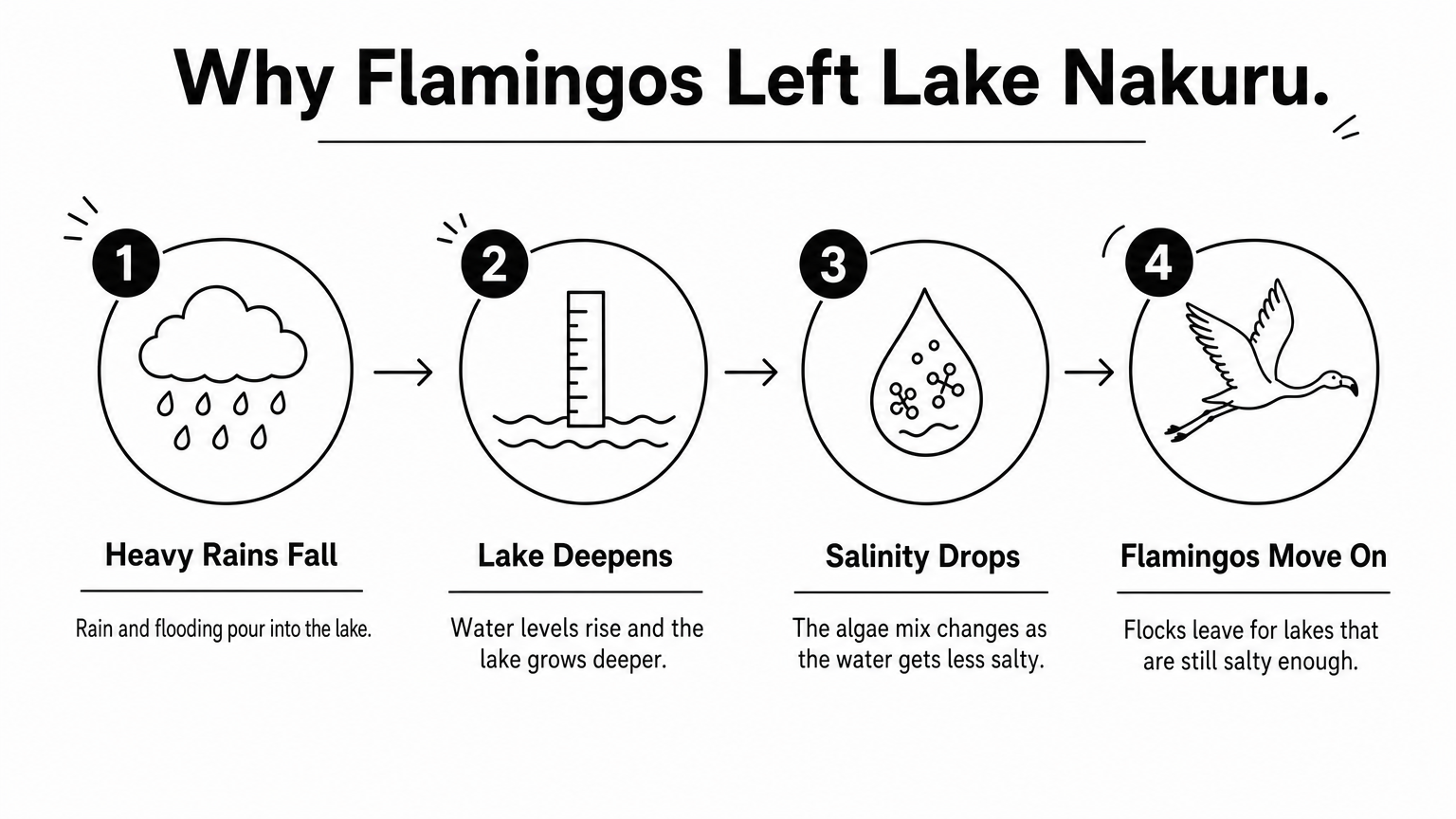
Rising water is the best-supported cause. After heavy rains and flooding, the lake deepened and its salinity dropped. The algae mix changed, and the flamingos left for lakes where the water was still salty enough. Shoreline vegetation also spread into former feeding zones.
Pollution from large-scale farming, tourism pressure and climate change are often cited as extra stresses. The evidence for them is weaker than for water level. Because the cause is chemical, a return is possible, and the thousands that came back in 2017 show it.
Flamingo numbers at Nakuru follow the salinity of the water, not the calendar.
How to see flamingos at Lake Nakuru
You cannot book a reliable Lake Nakuru flamingo season, because the birds follow water conditions. You can still improve your odds with timing, positioning and fresh information.
When to go
Flamingos are more likely during stable dry periods, when water levels fall and algae can build. In Kenya that usually means June to October and January to February. Those months also bring easier roads and good wildlife viewing, so you lose nothing if the lake is quiet.
Check conditions in the week before you travel. Ask your guide or the park rangers where the flocks are now, because a report from last year tells you very little.
Where to look inside the park
The park lies roughly 160 km, about 100 miles, northwest of Nairobi. Use this checklist once you are inside:
- Drive to Baboon Cliff, Out of Africa Hill or Lion Hill for panoramic views over the lake.
- Work the eastern shoreline and southern lake margins when flocks are present.
- Go in the early morning, when the light is softer and the water calmer.
- Bring binoculars, and a telephoto lens if you photograph, since flocks sit far out when water is high.
Fit Nakuru into a longer safari
Nakuru works best as one stop in a longer trip. Laxa’s 5-Days Big Five Kenya Safari runs from Nairobi to Lake Naivasha, Lake Nakuru National Park and the Masai Mara, with game drives, a boat ride, a walking safari and a Maasai village visit. It is listed at $1,460, down from $1,550 (a $90 saving), and park entry fees are included. International flights, visa fees, travel insurance and tips are not.
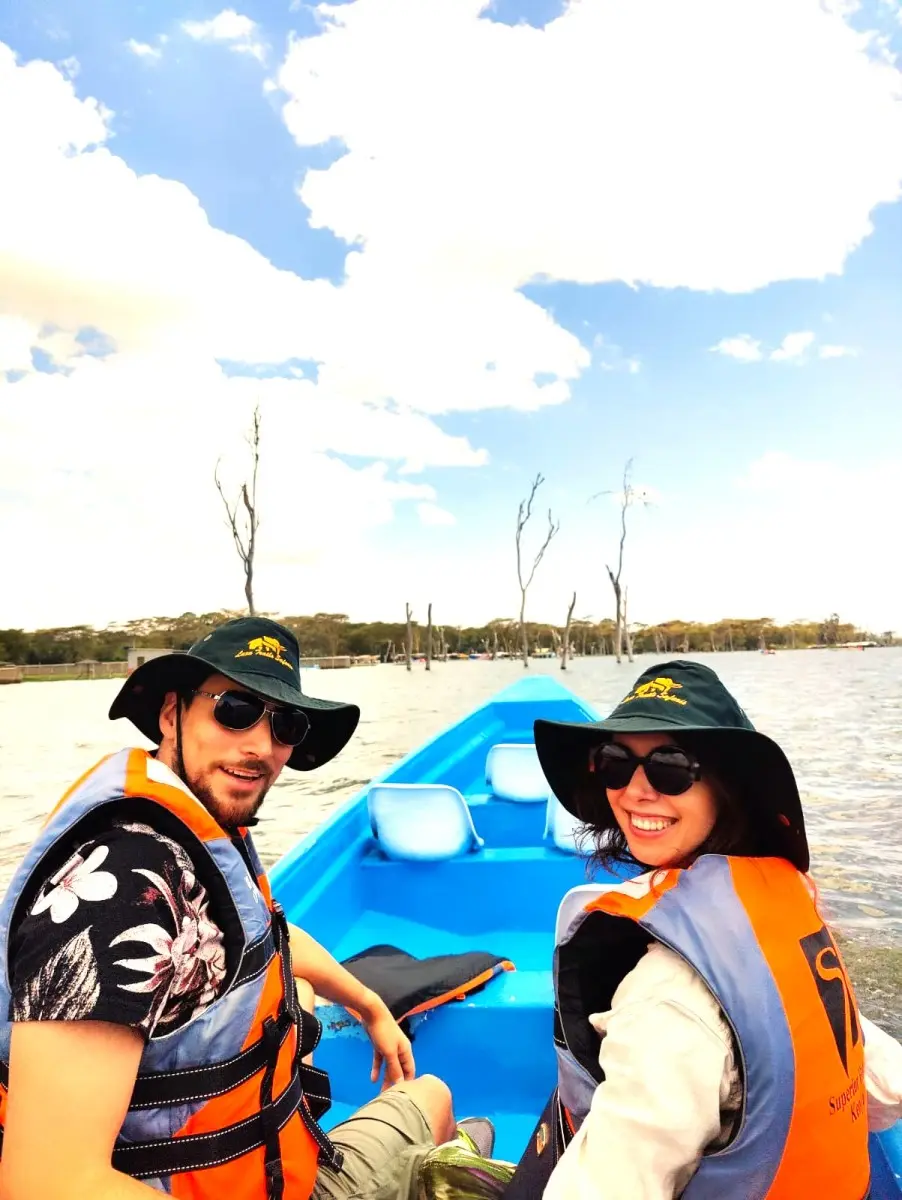
The Nakuru leg is built around rhinos, so a quiet lake never ruins the day. The 7-Day Masai Mara Great Wildebeest Migration Safari, listed at $2,446, also stops at Nakuru for rhinos and flamingos.
Treat flamingos at Nakuru as a bonus, and plan the day around rhinos, big cats and the 400 bird species.
Which other lakes in Kenya have flamingos
Three Kenyan lakes hold flamingos: Lake Nakuru, Lake Elementaita and Lake Bogoria. Bogoria has recently held the biggest flocks.
Kenya’s flamingo lakes compared
| Lake | Flamingo outlook | Access |
|---|---|---|
| Nakuru | Hit or miss, depends on water level | Easiest, with the most wildlife |
| Elementaita | Usually some flamingos, plus pelican nesting | About 30 minutes from Nakuru, much of it within the private Soysambu Conservancy |
| Bogoria | Best recent mega-flocks | Remote, with no lodging inside the reserve. A day trip from Lake Baringo (45 minutes) or Nakuru (2 to 2.5 hours) |
All three form the Kenya Lake System World Heritage Site. Lake Naivasha and Lake Baringo are freshwater lakes, so they do not attract flamingos, but they offer lodging and other wildlife. If you want a flamingo-focused trip, Elementaita is the easy add-on to Nakuru, and Bogoria rewards a longer drive.
Where flamingos breed
Most flamingos breed at Lake Natron, a remote and extremely saline soda lake in northern Tanzania. They then fly to the Rift Valley lakes in Kenya to feed. This is why a quiet Nakuru does not mean a collapsing population. It is one feeding stop in a much larger cycle.
Nakuru is where flamingos feed, Natron is where they breed, and Bogoria is where they have gathered most lately.
What to expect when you visit
Lake Nakuru’s flamingos have not vanished. They have moved with the water, and they show up in the thousands when conditions suit them. Go in the dry months, ask for a current report, and look from the viewpoints early in the day. If Nakuru is quiet, Elementaita and Bogoria are the next lakes to try. Either way, the park’s rhinos, giraffes and 400 bird species make the visit worthwhile.
If you want a Nakuru stop built into a Kenya itinerary, talk to Laxa Trails Safaris about a safari that includes Lake Nakuru. A tour consultant can fit the lake into a route that matches your dates, budget and group.