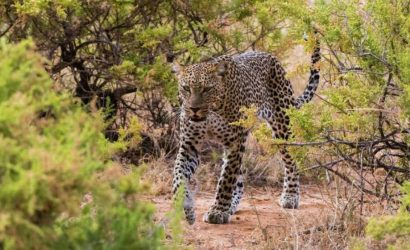
8 Best Serengeti National Park Activities for Your Safari
The best Serengeti National Park activities are game drives in the Seronera Valley, a Great Migration trip timed to the season, a river crossing, a sunrise balloon flight, birdwatching, a guided walk, a Maasai cultural visit, and a day in Ngorongoro Crater. If you have only a few days, put game drives and the migration first. If you want one splurge, add the balloon. Families do well with short drives and camp-based activities, while birders and walkers should choose their camp for what it offers.
The hard part is not finding things to do. The park covers about 3.7 million acres, the herds move with the rains, and some of the best-known experiences happen outside the park boundary. Most tour pages also skip what each activity asks of you in time, money and early mornings.
This list ranks eight activities and gives each one the same two parts: what to expect, and when to go with practical tips. Laxa Trails Safaris is a Kenya-based company founded in 2019 by a guide with more than 14 years in the field. The advice here reflects how we plan Serengeti and Ngorongoro itineraries from Arusha.
1. Game drives in the Seronera Valley
What to expect
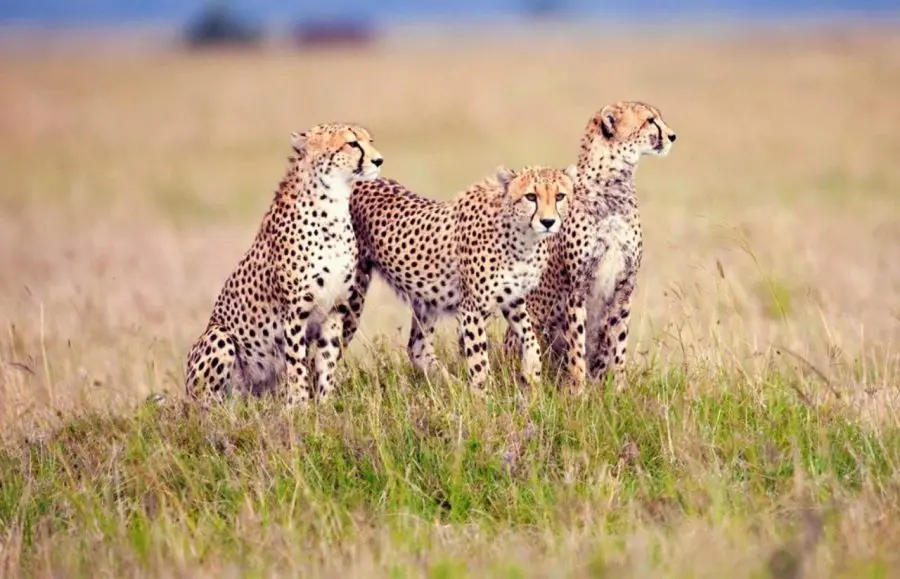
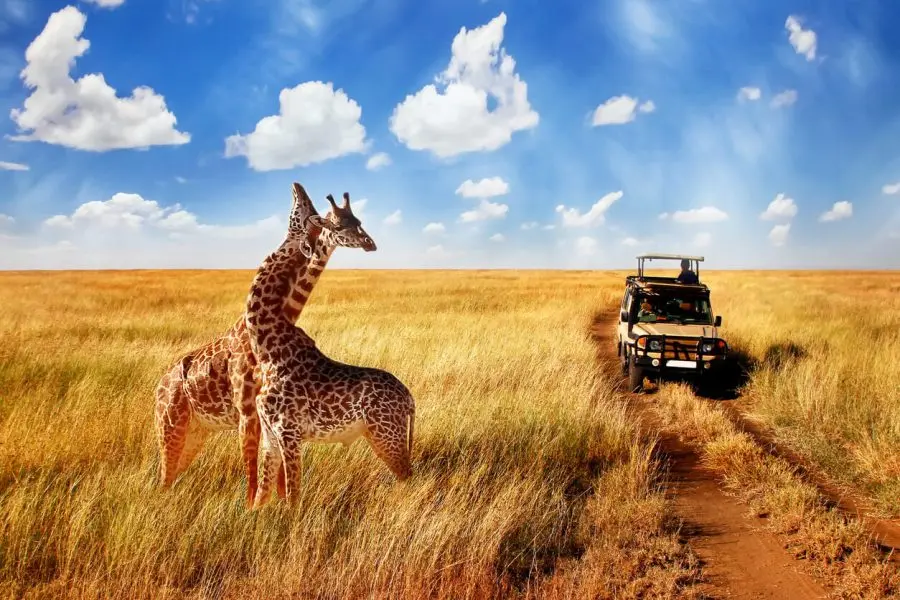
A game drive is the backbone of any Serengeti trip, and the Seronera River Valley in the central park is where it works best. The river holds water and grass through the year, so prey stays put, and the predators stay with it: lions, leopards, cheetahs and hyenas. You ride in a 4×4 with a pop-up roof and stand to scan while your driver-guide reads the signs. Circling vultures, a cluster of parked vehicles and the alarm calls of impala all point to a cat.
Most guides run two drives a day, one at dawn and one in the late afternoon, when predators move and the light is soft. Midday is for lunch and rest, because the cats sleep too. If you want to cover more ground, ask for a full-day drive with a packed lunch.
Spend your best light, dawn and late afternoon, on the road, and rest when the cats rest.
Best time and practical tips
Game drives work all year. July to September is dry, busy and predictable, because animals gather near the remaining water. November to March is greener and quieter. Most visitors skip April and May, when rain turns the tracks to mud.
- Park fees for non-resident adults have recently been published at about $70.80 to $82.60 per 24 hours, depending on season. Confirm current rates before you budget.
- Plan at least two full days inside the park. Most itineraries that include the Serengeti run four to six days.
- Check your government’s travel advisory for Tanzania and buy travel insurance before you pay a deposit.
Our 4 Days Serengeti & Ngorongoro Wildlife Safari starts in Arusha and uses a 4×4 Land Cruiser customized for game viewing. It includes full board and all park entrance fees.
2. Follow the Great Migration
What to expect
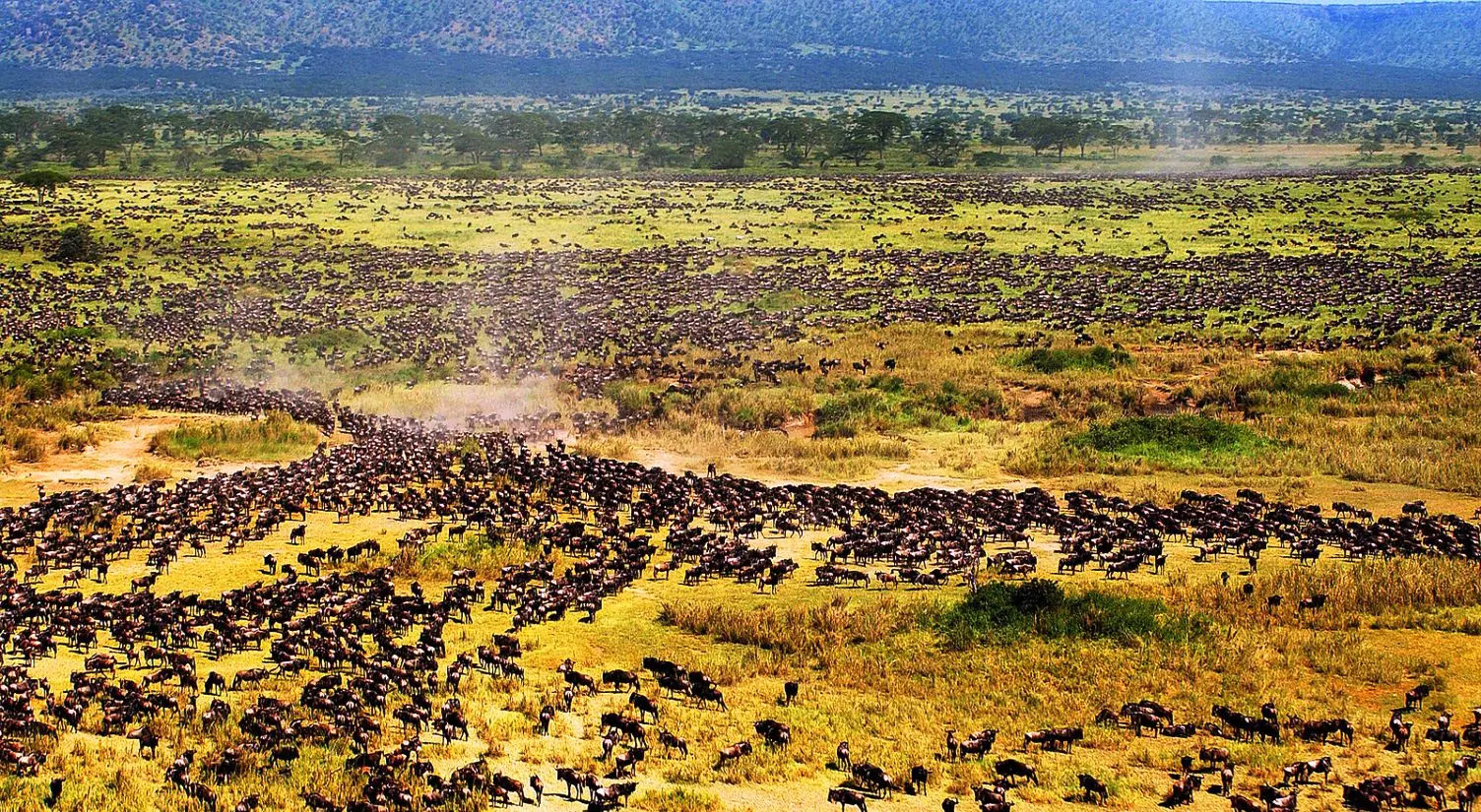
The Great Migration is a loop of roughly 1.8 million wildebeest, zebras and gazelles that never really stops. There is no single migration day, and no single place to see it. The herds follow rain and fresh grass, and the predators follow the herds. Your job is to match your dates to the right part of the circuit and base yourself in that area.
The table below shows the usual pattern. Timing shifts by weeks from year to year, so treat it as a guide and ask your operator where the herds are before you book.
| Months (approx.) | Where the herds are | What you see |
|---|---|---|
| December to March | Southern plains and Ndutu | Calving, with the peak in February and March, and predators hunting newborns |
| April to June | Central Serengeti, moving toward the Western Corridor | Long columns on the move, with muddy roads in the rains |
| July to October | Western Corridor, then the north near Kogatende | River crossings, with Mara River action peaking in August and September |
| October to November | Heading east and south again | Herds on the eastern plains, with cheetahs hunting in the open |
Pick the month first, then the area, because the herds never wait for your booking.
Best time and practical tips
Calving season in the south is the best choice for families and photographers who want action without crowds at a river. Crossings in the north are the best choice if drama matters most, but they are less predictable and draw more vehicles. Book early for July to October, when camps fill.
If you want the migration on both sides of the border, our 6 Days Masai Mara, Serengeti & Ngorongoro Migration Safari passes through Masai Mara and Serengeti and ends at Ngorongoro Crater. It includes a driver-guide, full board and park entrance fees.
3. Watch a river crossing and the hippo pools
What to expect
River crossings are the most dramatic thing you can watch in the Serengeti. In the north, herds gather on the banks of the Mara River near Kogatende and cross to reach the grass beyond, with crocodiles waiting in the water. The Grumeti River in the Western Corridor has a similar cast. A crossing cannot be scheduled. Herds mill at the edge for hours, sometimes days, then go all at once, so you need patience and a guide who knows where to wait.
For a calmer water stop, visit the Retina Hippo Pool in central Serengeti, where the Seronera and Orangi rivers meet. Roughly 200 hippos pack into one deep pool, and you may also see crocodiles and herons. Hippos are dangerous, so keep your distance and follow your guide’s instructions.
No guide can promise a crossing, so build in several days near the river instead of one.
Best time and practical tips
Mara River crossings peak around August and September, and the north is best from roughly July to October. Grumeti crossings come earlier in the circuit, in the middle of the year, with dates that shift with the rains. The hippo pool is best in the dry season, July to November, when lower water exposes more animals.
Bring a boxed lunch and expect to wait. Keep your vehicle back from the bank and on the track, and step out only when your guide says it is safe. Crowding the herd can turn it away from the water, and rangers enforce park rules.
4. Take a sunrise hot air balloon safari
What to expect
A hot air balloon safari lifts you over the plains at sunrise for about an hour of silent, wide-angle wildlife viewing. Pickup is usually around 5 a.m., so the balloon rises with the sun. The pilot lands wherever the wind allows, and a ground crew meets you for a sparkling wine toast and a bush breakfast served in the open.
Animals look small from the air, so treat the flight as a view of the park’s scale, not a replacement for a game drive. It shows you herd patterns and the shape of the land that a vehicle never reveals.
A balloon shows you the scale of the Serengeti and a game drive shows you the animals, so book both.
Best time and practical tips
Flights go ahead only in suitable weather. Wind or low cloud can cancel one, so never schedule it for your last morning. It is one of the priciest add-ons, and the 5 a.m. start is the other cost. Most travelers who take it say it is worth both. Check current rates with your operator, because they vary by season and operator.
- Book it in advance, since seats are limited.
- Keep the afternoon free for a rest or a short drive.
- Dress in layers, because pre-dawn is cold.
Some of our Tanzania itineraries list an optional hot air balloon safari as an extra, including the 5-Day Tanzania Classic Safari and the 6 Day Private Safari in Tanzania Extravaganza. Ask for it when you request a quote.
5. Go birdwatching on every drive
What to expect
The park hosts more than 500 bird species, so birdwatching fits into every game drive at no extra cost. Look for lilac-breasted rollers on exposed branches, ostriches on the open plains, secretary birds stalking the grass and kori bustards in the short-grass areas. Vultures at a carcass often reveal a kill before you see the predator.
The rivers and woodland around Seronera and the Grumeti give the widest variety. You do not need a special trip. Ask your driver-guide to slow down when you spot something, and agree on a bird stop or two each day so the group stays happy.
You already have the best birding platform in Africa under your seat, so use it.
Best time and practical tips
The green season, November to March, is the best time for birds, because migrants arrive and breeding plumage shows. Early morning is when birds are most active and easiest to photograph.
- Bring binoculars. An 8×42 pair is a good all-round choice.
- Download or carry a field guide for East African birds.
- Tell your guide you are interested before the first drive, so the day’s route includes water and woodland.
Birdwatching also suits the quieter months, when fewer vehicles are on the tracks and you can stay longer at each stop.
6. Join a guided bush walk or climb a kopje
What to expect
The Serengeti has no official hiking trails, so walking here means guided walks arranged through camps, always with an armed TANAPA ranger. Walks range from hour-long strolls to multi-day walking safaris with fly-camping. You tune in to tracks, dung, insects and plants, and your guide explains what a vehicle passes at speed.
Kopjes, the weathered granite outcrops scattered across the plains, are natural viewpoints. You can walk the trail at Naabi Hill near the main gate for wide savannah views, or book a guided climb at the Moru Kopjes in the central plains. The Moru area is also known for rock paintings and as the home of the park’s small black rhino population.
Walking in the Serengeti is a camp-arranged privilege, not a trail you can hike alone.
Best time and practical tips
Walks are best in the cooler hours, early morning or late afternoon. Availability depends on the camp and its location, so ask before you book rather than on arrival. Rangers decide where it is safe to walk, and they may cancel a route if animals are nearby.
- Wear neutral-colored clothing, closed shoes and a hat.
- Bring water, sunscreen and a light jacket.
- Listen to your ranger and walk in single file.
If you are traveling with children, ask about minimum ages for walks, because camps set their own limits.
7. Visit a Maasai village or cultural experience
What to expect
A Maasai cultural visit usually includes a talk with a community member, a welcome song or dance, and a look inside a traditional boma, the enclosed homestead. You learn how the homes are built, what the community eats and how livestock shapes daily life. The word Serengeti is widely said to come from a Maasai word for endless plains.
These visits happen outside the national park boundary, in villages near the gates and in the neighboring Ngorongoro Conservation Area, not inside the Serengeti itself. Many camps and operators offer them as a half-day add-on, and a few arrange evening talks at camp.
A good cultural visit is a conversation, not a photo stop, so ask questions and listen.
Best time and practical tips
Cultural visits work in any season, so they are a good plan B for a rainy afternoon. Before you go, ask how the fee reaches the community, and whether the village is a genuine home or a staged display. Ask permission before you photograph people, and agree on any extra costs in advance.
Our 5-Day Tanzania Classic Safari includes a cultural encounter at Lake Eyasi, alongside Tarangire, the Serengeti and the Ngorongoro Crater. If culture matters to you, tell us when you ask for a quote and we will tell you what each itinerary includes.
8. Add Ngorongoro Crater and Olduvai Gorge
What to expect
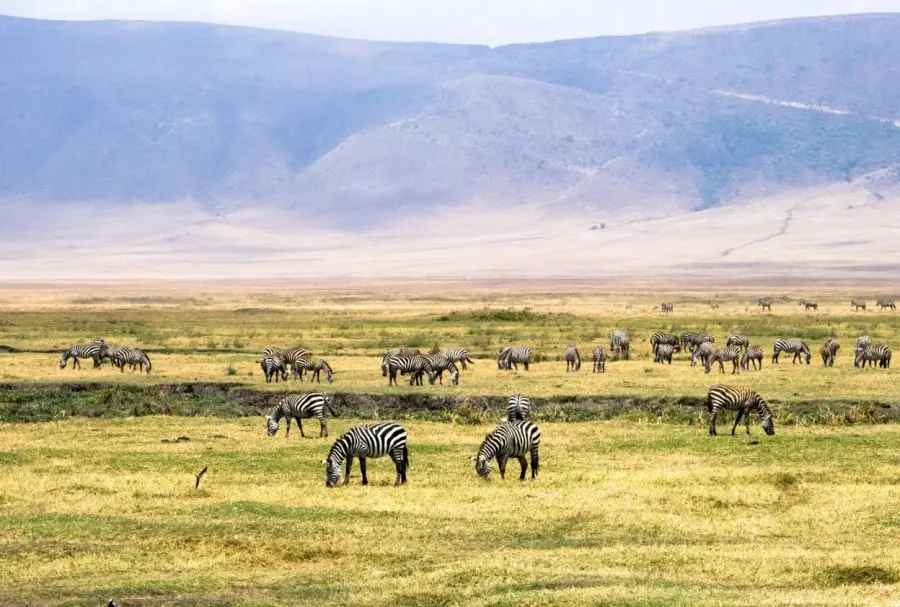
Ngorongoro Crater is not part of Serengeti National Park, but it sits on the park’s eastern edge and almost every Serengeti itinerary includes it. The caldera is about 2,000 feet deep and covers more than 100 square miles, and its floor holds a dense mix of wildlife in one compact area. Rhinos, wild dogs and big cats are all possible here, and black rhino sightings are more likely here than in most of the Serengeti.
Olduvai Gorge, on the route between the two, is a famous early-human fossil site. A short stop with a guide and a small museum gives you context in under an hour. It makes a useful change after days of driving.
Treat the crater as the finale of your Serengeti trip, because the animals are close and the descent is short.
Best time and practical tips
Descend early in the morning, when animals are active and the crowds are lighter. Visitors have reported a separate crater service fee of around $200 per vehicle, so check whether your package covers it. Allow half a day to a full day on the crater floor.
Our 3 Days Ngorongoro Crater Safari Adventure runs from Arusha with game viewing on the crater floor. The 4-day Serengeti trip adds the Olduvai Gorge stop, and both include all park entrance fees.
Planning your Serengeti days
The best Serengeti trips pair a few activities well instead of chasing all eight. Start with game drives in Seronera, choose the migration area that matches your month, and add either a balloon flight or a guided walk if your budget and energy allow. Fit a cultural visit and Ngorongoro Crater around the edges, and bring binoculars for the birds.
Timing and fees change, so confirm park rates and the herds’ location before you pay a deposit. Take out travel insurance, and give yourself at least two full days inside the park.
When you are ready to turn this list into an itinerary, plan your Serengeti safari with Laxa Trails Safaris. Tell us your dates, group size and budget, and one of our Tour Consultants will come back with a quote.