How to Plan and Book a 3-Day Masai Mara Safari from Nairobi
The simplest way to book a 3-day Masai Mara safari from Nairobi is to work in this order. Pick your dates first, choose road or fly-in transport, choose where to sleep, and only then compare operators on one itemized quote. Expect two nights in or beside the reserve and five to six hours of driving each way if you go by road. Budget roughly $300 per person at the very bottom and well over $1,500 per person for private, comfortable trips.
The problem is that three days is short, and every choice changes how much wildlife you actually see. Operators advertise "from" prices that may leave out park fees, flights, or high-season surcharges. Two itineraries can look identical on paper while one gives you three game drives and the other gives you five. Many travelers also find out too late that day one and day three are mostly spent in a vehicle.
This guide walks you through seven steps, from choosing the month to sending your first enquiry. It uses real price ranges, a worked budget, a day-by-day plan, and a copy-ready quote request. It comes from Laxa Trails Safaris, a Kenya-based company founded in 2019 by a tour guide with more than 14 years of experience in the field.
What a 3-day Masai Mara safari gives you
A 3-day Masai Mara safari gives you two nights near the reserve, one full day of game viewing, and two partial days on either side. That is enough to see lions, elephants, giraffes, hippos, zebra, and wildebeest. It is the shortest trip that feels like a real safari and not a rushed day tour.
How the three days are spent
Most itineraries follow the same shape. Day one is a travel day. You leave Nairobi between 6:00 and 8:30 am, drive five to six and a half hours, and reach your camp or lodge for lunch. One afternoon game drive follows. Day two is your only full day in the reserve, with an early start and a picnic lunch in the bush. Day three is a morning drive, breakfast, and the road back to Nairobi.
In game-viewing terms, a road trip gives you about one afternoon drive, one full day, and one morning drive. A fly-in trip shifts that balance because you land in the reserve by mid-morning. Step 2 covers the difference.
Is three days enough?
Yes, if this is your first safari and you want the classic Mara experience. The reserve is known for big cats. Guides here track individual lion prides, and cheetahs often hunt on the open plains. In three days you have a good chance at lions, elephants, buffalo, giraffes, hippos, and crocodiles. Leopards and cheetahs are common enough to hope for. Rhinos are the exception. The Mara has only a small rhino population, so do not plan the trip around seeing one.
Three days works less well in two cases. The first is a Mara River crossing during the wildebeest migration, which depends on the herds and not on your schedule. The second is a slow, photography-focused trip. In both cases, add a day. A fourth day gives you a second full day in the reserve, and Laxa Trails Safaris runs a 4-day migration safari built around two full days of game viewing.
Three days is enough to see the Mara well, but not enough to wait for a river crossing.
Step 1. Choose your travel dates
Choose your dates by deciding what matters more: the migration or a lower bill. July to October brings the wildebeest and the highest park fees. January to June costs less and is quieter. The same 3-day Masai Mara safari can cost hundreds of dollars more in August than in February.
Match the season to what you want to see
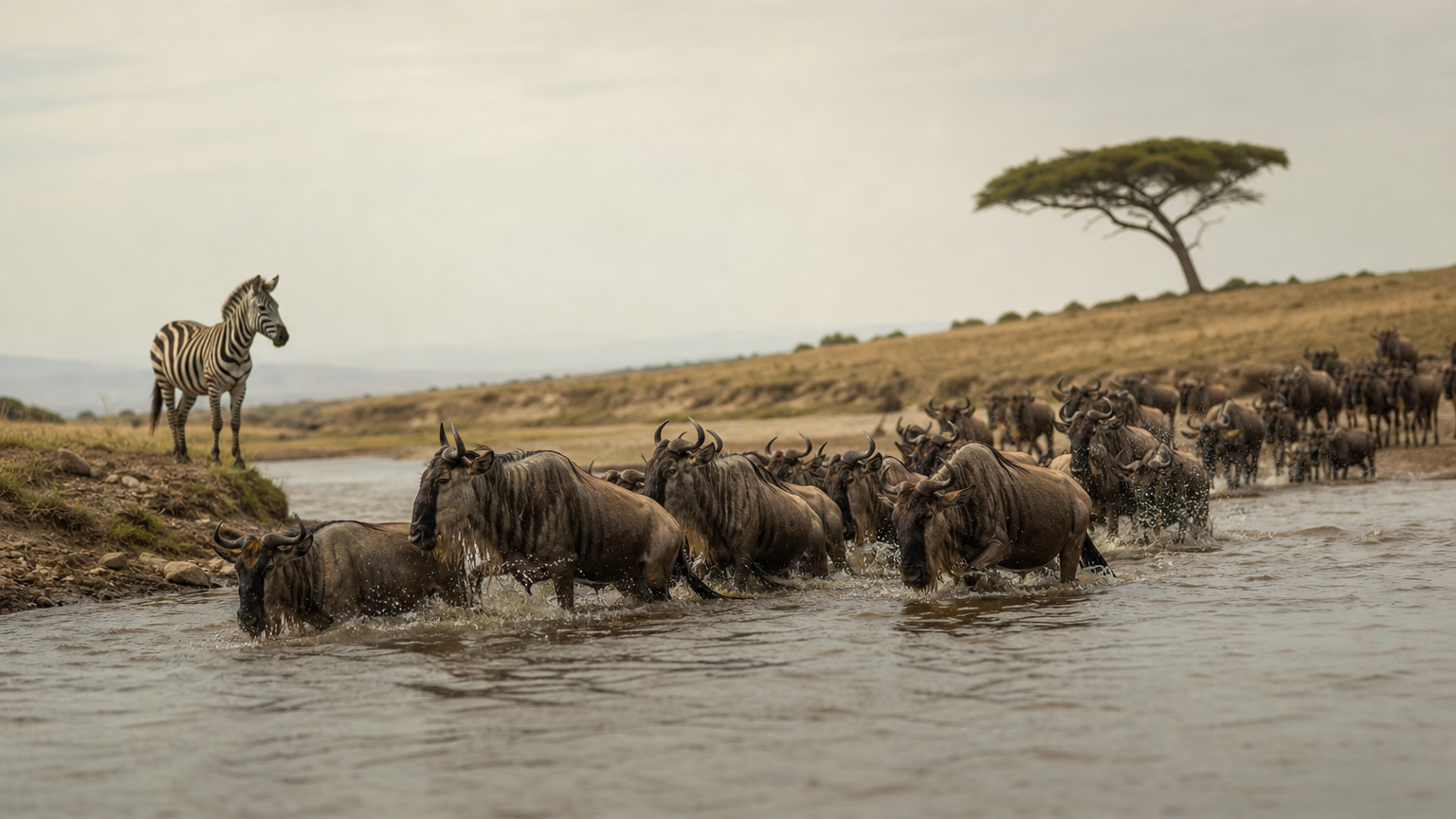
The wildebeest herds usually arrive in the Mara from July and stay into October. Crossings of the Mara River are most likely from late July through September, though no operator can promise one. Outside those months the reserve still holds resident lions, elephants, and plains game year-round. The table sets seasons beside park fees.
| Months | Conditions | Reserve fee, non-resident adult, per day | Best for |
|---|---|---|---|
| January to February | Mostly dry and warm, light showers possible | $100 | Lower fees, fewer vehicles, young animals |
| March to May | Long rains, muddy tracks, some camps close | $100 | Lowest prices, flexible bookings |
| June | Drying out, green landscape | $100 | Good value just before the peak |
| July to October | Dry season, migration herds | $200 | Migration, clear views, easy driving |
| November to December | Short rains, green landscape | $200 | Quieter reserve, lush scenery |
Understand how park fees work
Park fees are the biggest fixed cost in a Mara trip, and they depend on your dates. Non-resident adults pay about $100 per day from January to June and about $200 per day from July to December. Children and Kenya residents pay different rates. Fees run on a roughly 24-hour clock from the time you enter, so ask your operator exactly how many fee-days your plan uses. Rates change, so confirm the current figure when you request your quote.
Book early for peak months
If you are traveling from July to October, book three to six months ahead. Good camps near the main gates fill first. If you can only travel in the rains, you are not stuck. Roads are slower and some camps close, but prices drop and the reserve is quiet. Ask your operator which camps stay open on your dates.
Your travel month sets the park fee, the crowd level, and your odds at the migration before any other choice does.
Step 2. Decide between road and fly-in
Go by road if you want the lowest price and do not mind a long first and last day. Fly if you want more time in the reserve and can pay for it. Both versions of a 3-day Masai Mara safari end with the same wildlife. The difference is how many hours you spend looking at it.
Road: what the drive is really like
The road trip takes five to six and a half hours each way, depending on traffic leaving Nairobi. You drive down into the Great Rift Valley, stop at a viewpoint, pass through Narok town for fuel and restrooms, and then take a rougher final stretch to a reserve gate. Sekenani and Talek are the gates most camps use.
Your vehicle matters on that last stretch. Operators use either a 4×4 safari jeep or a minibus with a pop-up roof. Laxa Trails Safaris uses a Land Cruiser jeep or a pop-up-roof minibus, and recommends no more than seven passengers per vehicle so everyone keeps a window seat. Ask any operator for a guaranteed window seat and a maximum passenger count.
Fly-in: when the extra cost pays off
A fly-in trip leaves from Nairobi’s Wilson Airport, takes about 45 minutes, and lands on an airstrip near your camp. A driver-guide collects you and you are on a game drive within hours. A fly-in cuts the six-hour drive on day one, which usually adds one extra game drive to your trip. It also costs more, since return airfare is usually a few hundred dollars per person on top of the road price.
Luggage is the catch. Small aircraft have strict weight limits, often around 15 kg in a soft bag, so confirm the allowance with your operator before packing. Laxa Trails Safaris offers a 2-day flying safari with a 45-minute flight and a night in a lodge in the heart of the park. That is a good fit if you have even less time than three days.
Road versus fly-in at a glance
| Road | Fly-in | |
|---|---|---|
| Travel time each way | 5 to 6.5 hours | About 45 minutes by air |
| Day one game viewing | One afternoon drive | Usually a morning and afternoon drive |
| Cost | Lowest | Road price plus return airfare |
| Luggage | Flexible | Strict weight limit, soft bags |
| Scenery on the way | Rift Valley viewpoint, Narok | Aerial views |
| Best for | Budget travelers, first-timers | Short schedules, comfort seekers |
If your budget is tight, go by road and spend the savings on a better camp. If your time is tight, fly.
Step 3. Pick where you will sleep
Pick your camp by deciding how much comfort you need and how close you want to be to the plains at dawn. The Masai Mara has basic camping, mid-range lodges, and luxury tented camps. Your choice affects price more than any other item except the season.
Camp, lodge, or luxury tent
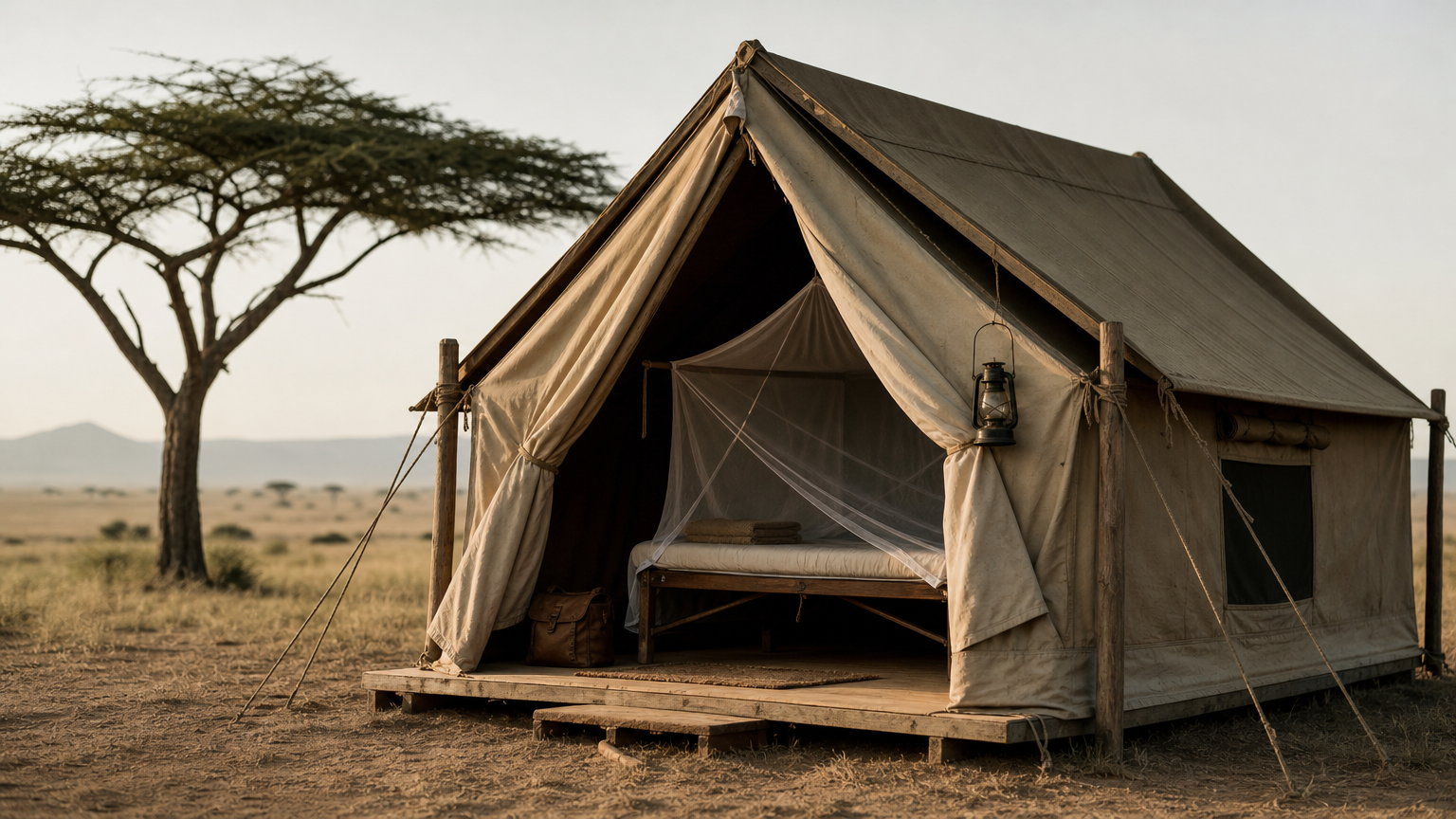
Basic camping is the cheapest. You sleep in a simple tent, often with shared facilities, and it is how the lowest-priced departures stay low. Lodges and permanent tented camps add proper beds, private bathrooms, and a restaurant. Luxury tented camps add larger tents, better food, and more service. Laxa Trails Safaris books all three styles depending on the client’s budget, from basic camping to luxury tented camps or lodges.
For a trip this short, one base for both nights is the right call. Moving camps would waste a precious half day. Your driver-guide arranges all activities from that one base, which keeps the logistics simple.
Inside the reserve or outside the gate
Camps inside the reserve put you on the plains at first light, which is when predators are most active. Camps outside the gates are cheaper and often just as pleasant, but you spend part of each morning and evening driving to the entrance. Some camps outside the gate also let you pay reserve fees only for the days you enter.
Private conservancies bordering the reserve, such as Naboisho, Mara North, and Olare Motorogi, offer quieter game viewing and a more exclusive feel. They cost more and use their own fee structures, so they rarely appear in budget packages.
Meals and what to expect
On most safari packages, breakfast and dinner are buffets at camp, and lunch on day two is a picnic in the reserve. Laxa Trails Safaris serves mainly European-style buffets with African influences. Tell your operator about dietary needs when you book, not on arrival. Remote camps cannot always improvise.
A camp just outside the gate can save you real money, but a camp inside saves you the morning commute.
Step 4. Build your day-by-day plan
A good 3-day Masai Mara itinerary gives day one to travel and an afternoon drive, day two to the whole reserve, and day three to a sunrise drive before the road home. The timings below are typical for road trips from Nairobi. Your operator will adjust them for your camp, your gate, and the season.
The plan at a glance
| Time | Day 1 | Day 2 | Day 3 |
|---|---|---|---|
| 6:00 to 8:30 am | Pickup in Nairobi | Early game drive | Optional sunrise drive |
| Mid-morning | Rift Valley viewpoint, Narok | Game drive continues | Breakfast, check out |
| Midday | Arrive camp, lunch | Picnic lunch in the reserve | Drive to Nairobi |
| Afternoon | Game drive from about 3:30 pm | Game drive continues | Arrive Nairobi mid-afternoon |
| Evening | Dinner at camp | Return to camp for dinner | Onward travel |
Day 1. Nairobi to the Mara
Expect an early pickup from your Nairobi hotel or the airport. Laxa Trails Safaris’ 3-day Masai Mara and Lake Naivasha package, for example, departs at 8:30 am, while other operators leave as early as 6:00. The earlier you leave, the more of the afternoon drive you get. Pack water and a light jacket, because the Rift Valley viewpoint can be cool and windy.
You reach camp in time for lunch, then head out around 3:30 pm for a first drive. Late afternoon is a good time for big cats as temperatures drop. Return for dinner at camp. If you booked the Lake Naivasha version, the boat ride on the lake replaces part of the road time, so ask where in the three days it falls.
Day 2. A full day in the reserve
Day two is the one that makes the trip. Leave at first light with breakfast boxes or a quick breakfast, and spend the day on the plains. Your guide will use radio contact with other guides to find lions, cheetahs, and elephants. Lunch is usually a picnic, often near the Mara River, where hippos and crocodiles line the banks.
Since fees run on a clock, operators prefer you stay in the reserve all day and not return mid-day. If you want a Maasai village visit, late afternoon is a good slot. Ask permission before taking photos, expect to be invited to buy beadwork, and feel free to haggle politely. A hot air balloon flight at sunrise is the other popular add-on. It costs extra, needs advance booking, and is not included in typical safari packages.
Day 3. Last drive and the road home
Many operators offer an optional sunrise drive on day three, when predators are returning from the night. You then have breakfast, check out, and leave the reserve in the morning. The drive back takes five to six hours, with arrival in Nairobi around mid to late afternoon.
Do not book a same-day international flight. Traffic in Nairobi can add an hour or more to a late arrival. Book your flight out for late evening at the earliest, or better, for the next day.
Treat day two as the whole safari and days one and three as bonuses, and you will plan the trip correctly.
Step 5. Set a realistic budget
A 3-day Masai Mara safari from Nairobi costs from about $300 per person for the cheapest shared camping trips to $1,600 and up for private, comfortable ones. The spread comes from group size, accommodation, and season. Compare quotes by the total for three days, not the daily rate.
What three days costs by travel style
Published figures vary because some sources quote a total and others a daily rate. Put side by side, they fit together as follows.
| Travel style | Per person per day | Total for 3 days, per person |
|---|---|---|
| Cheapest shared camping | About $100 | From about $300 |
| Shared group tour | $200 to $300 | $600 to $900 |
| Private trip, two sharing | $350 to $540 | $1,050 to $1,620 |
| Private trip, solo traveler | From about $600 | From about $1,800 |
Mid-range tours generally start from about $500 per person. Laxa Trails Safaris lists its 3-Days Masai Mara, Lake Naivasha Budget Safari from $650, which sits in the shared-group band. It lists park entry fees, a Lake Naivasha boat ride, a professional English-speaking driver-guide, and bottled water. Check the product page for what applies on your dates.
A worked example for two travelers
Say a couple wants a private, mid-range trip in July. Assume $450 per person per day, a midpoint of the private range. That is $450 × 3 days = $1,350 per person, or $2,700 for the two of you.
Park fees make up a large share of that. In July, two adults paying $200 per day for two fee-days is $200 × 2 days × 2 adults = $800. That is roughly 30% of the total. In February the same fees are $100 × 2 days × 2 adults = $400, so you save $400 on fees alone before any off-season camp discount.
What is and is not included
Check every quote against this list. Missing items are where "cheap" quotes become expensive.
| Usually included | Usually extra |
|---|---|
| Transport and driver-guide | International flights |
| Park entrance fees (confirm) | Kenya entry authorization |
| Accommodation | Travel insurance |
| Full-board meals | Tips and gratuities |
| Bottled or mineral water | Soft and alcoholic drinks |
| Game drives | Balloon safari |
| Lake Naivasha boat ride, where listed | Return airfare, if you fly in |
Compare total price against inclusions, because a lower quote that leaves out park fees is not cheaper.
Step 6. Compare operators and book
Compare at least three operators on the same inputs: dates, group size, accommodation level, and transport. Then book with the one whose quote is clearest about what is included. A cheap, vague quote is a warning, not a bargain.
Check the operator first
A safari operator should be licensed in Kenya, have a physical office, and answer questions in writing. Look for a real address, phone numbers, and named consultants. Laxa Trails Safaris, for example, lists an office address in Buruburu, Nairobi, a mobile number, WhatsApp, and two email addresses on its site. Read independent reviews on Tripadvisor and look for details such as itinerary accuracy, vehicle condition, and guide knowledge, not just star ratings.
Ask these questions before paying
Send the same questions to every operator and compare the answers side by side.
- Is the trip private or shared, and what is the maximum number of passengers per vehicle?
- Is a window seat guaranteed, and does the vehicle have a pop-up roof?
- Which camp or lodge, which gate, and is it inside or outside the reserve?
- Are park fees included, and for how many days?
- What exactly is excluded: drinks, village visit, balloon, tips?
- What is the deposit, when is the balance due, and what is the cancellation policy?
Send a clear enquiry
A specific enquiry gets a specific quote. Copy this and fill in the brackets.
Subject: Quote request: 3-day, 2-night Masai Mara safari from Nairobi

Hello,

I would like a quote for a 3-day, 2-night Masai Mara safari from Nairobi.

Dates: [start date] to [end date]
Travelers: [number of adults] adults, [number of children and ages]
Transport: [road / fly-in / open to both]
Accommodation: [basic camping / lodge / luxury tented camp]
Departure point: [Nairobi hotel or JKIA airport]
Interests: [big cats, migration, photography, Maasai village visit]

Please confirm in your quote:
1. The camp or lodge and its location relative to the gate
2. Whether park fees are included, and for how many days
3. Vehicle type, maximum passengers, and window seat guarantee
4. Meals, drinking water, and any exclusions
5. Deposit, balance due date, and cancellation terms

Thank you,
[Name]
Pay and insure
Most operators ask for a deposit to confirm the booking and the balance before departure. As one example, Laxa Trails Safaris asks for a 50 to 60% deposit by wire transfer, with the balance due 30 days before the safari or paid in US dollar cash on arrival. Get the payment terms in writing, and pay only to a business account that matches the company name. Buy travel insurance before you pay anything non-refundable. Laxa Trails Safaris strongly recommends it, and insurance is excluded from the packages.
Send the same questions to every operator, and the clearest answers will tell you who to book with.
Step 7. Pack and prepare for the trip
Pack light, in soft bags, in neutral colors, and with layers. A 3-day Masai Mara safari starts cold at dawn and gets hot by midday. Sort your entry paperwork and health plans well before you go.
What to pack
- A soft duffel bag, which fits into a safari vehicle and a small aircraft far better than a hard suitcase
- Khaki, tan, or green clothing, with long sleeves for sun and insects
- A fleece or warm jacket for early drives
- A wide-brimmed hat, sunglasses, and high-SPF sunscreen
- Binoculars and a camera with a zoom lens
- A power bank and a universal adapter
- Comfortable closed shoes
- Small US dollar bills for tips and souvenirs
Entry, health, and money
Kenya uses an online electronic travel authorization for most foreign visitors. Apply through the official government portal, not a third-party site, and do it before you travel. The Masai Mara is a malaria-risk area, so talk to your doctor or a travel clinic about prevention well ahead, and see the CDC’s Kenya travel health page for current guidance. Keep copies of your passport and insurance policy separate from the originals.
How to behave on game drives
Stay inside the vehicle unless your guide says otherwise. Keep your voice low near animals, never feed wildlife, and let the guide choose the distance. Always ask before photographing people. These rules keep you safe, and they usually lead to better sightings because animals stay relaxed.
Pack for a cold dawn and a hot noon, and your three days will be far more comfortable.
Your three days in the Mara
A 3-day Masai Mara safari from Nairobi works best when you decide in the right order. Choose dates for the fees and the migration, pick road or fly-in for your budget, and sleep where it suits your comfort. Build the itinerary around one full day in the reserve, and compare operators on inclusions rather than headline prices. Then book early and pack light.
If you want a quote built around your dates, group size, and budget, contact Laxa Trails Safaris. An experienced tour consultant will reply with details, and you can ask about the budget Masai Mara and Lake Naivasha package, a 4-day migration trip, or a custom plan.