Big Five Safari Africa: What They Are and Where to See Them
Every Big Five safari Africa operators offer is built around the same five animals: the lion, leopard, elephant, rhinoceros and Cape buffalo. The name comes from 19th-century hunters, who ranked these five as the hardest and most dangerous animals to hunt on foot. The hunting is gone, and visitors now shoot photographs instead, but the label stuck as the standard wish list for a first safari.
Seven countries in eastern and southern Africa can offer all five, but your odds differ a lot between parks, seasons and trip lengths. This article explains why the Big Five matter, what each animal is like, which one is hardest to find, where to look, and how to plan a trip that gives you a fair chance at all five.
Laxa Trails Safaris is a Kenya-based company founded in 2019 by a guide with more than 14 years of field experience. The planning advice below comes from running these trips, and Kenya serves as the worked example.
Why the Big Five still shape how people plan a safari
The Big Five matter because they turn a vague wish to see wildlife into a concrete checklist, and that checklist points you to the right parks. For a first-time visitor, it is the simplest way to compare one safari with another.
Where the name comes from
The term dates to the 19th century, when trophy hunters singled out lions, leopards, elephants, rhinos and Cape buffalo as the animals most difficult to bring down on foot. Size and fame had little to do with it. Danger and elusiveness decided the list, and the group was never an official or scientific category.
That explains the usual puzzles. A giraffe is huge and famous, but it is harmless and easy to approach, so it never counted as a trophy challenge. The hippo is deadly, which is why some operators add it as a sixth animal, but the original list stayed at five. The five animals share little biologically: two are cats and three are heavyweight plant eaters.
Why the list still matters today
Today the list works as a planning tool. Each animal prefers a different habitat, so chasing all five takes you into varied landscapes and gives your trip a shape. It also gives your guide a clear brief, so the day revolves around rhino sites, leopard trees and elephant waterholes instead of random driving.
Visitor spending also helps protect these animals. Elephants and rhinos have suffered heavily from poaching, and the black rhino, with roughly 6,500 left in the wild, is the rarest of the five. Park and conservancy fees help pay for the rangers who guard them.
The Big Five is a hunting-era checklist that has become the simplest way to plan a wildlife trip.
Big Six, Big Seven and the Little Five
You will meet spin-offs of the list while researching. None of them is a standard.
- Big Six: no fixed definition. Operators who use the term pick their own sixth animal.
- Big Seven: used in South African tourism, it adds the great white shark and the southern right whale.
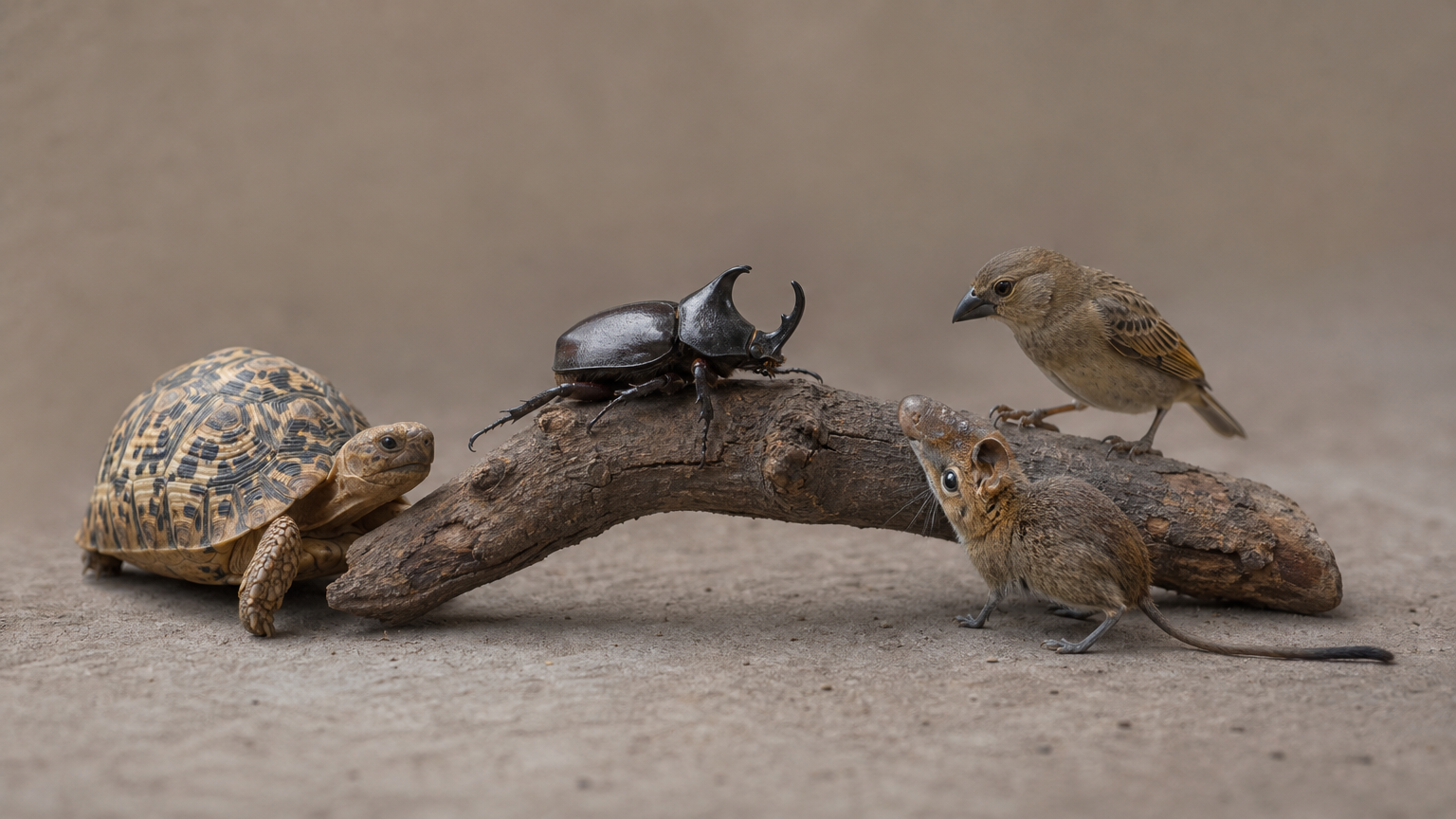
- Little Five: the rhinoceros beetle, buffalo weaver, elephant shrew, leopard tortoise and antlion, named after the big animals.
Meet the five animals and how hard each one is to see
The five split into two big cats and three heavyweights, and they are not equally easy to find. Lions, buffalo and elephants appear on most game drives, leopards take patience, and rhinos are the hardest. The same names apply wherever you go, so the animals are your constant and the parks are your variable.
Lion and leopard: the big cats
Lions live in prides made up mostly of related females, around 99 percent, and the lionesses do the hunting and raise the cubs. Males can sleep up to 20 hours a day, so the best time to watch lions is early morning and late afternoon. They favor open grassland, which is why plains such as the Masai Mara and Serengeti produce so many sightings.
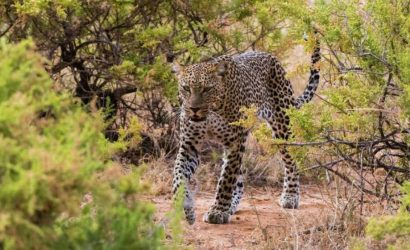
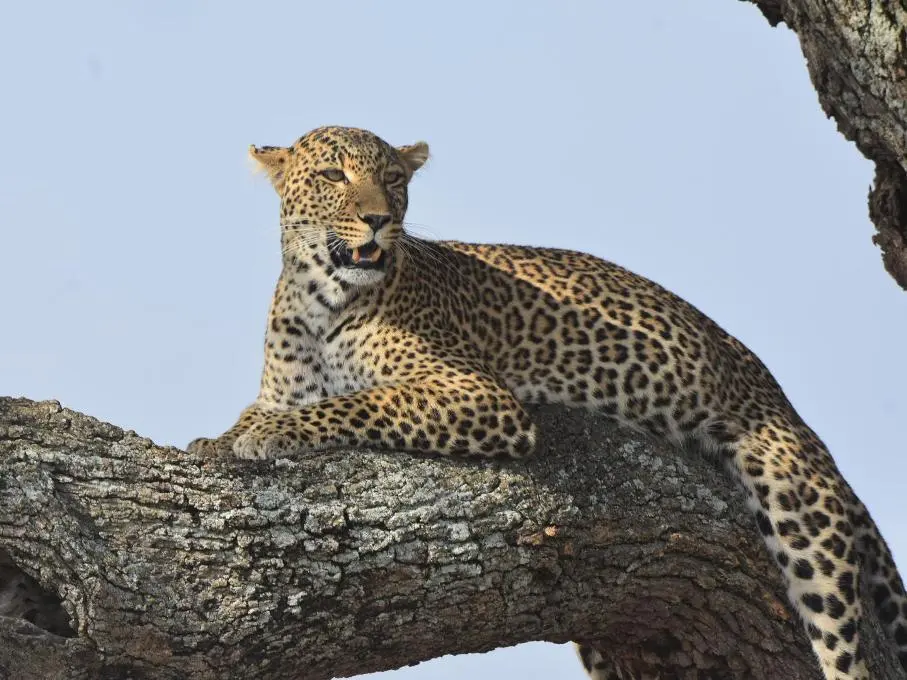
Leopards are solitary and mostly nocturnal. They run at up to 35 mph and haul their kills into trees, sometimes prey as heavy as themselves, so you often find them by looking up. Your guide will scan riverside trees and thick bush rather than open ground.
Elephant, rhino and buffalo: the heavyweights
The African elephant is the largest living land animal, at up to about 7 tons. Elephants do not sweat, so mud and water matter to them, and rivers and waterholes are where you watch them bathe, drink and play. A calf in the mud is a better photograph than a lone bull walking past.
Two rhino species count toward the Big Five. White rhinos are grazers with wide mouths, and black rhinos are browsers that tend to be more nervous. Both carry horns made of keratin, the protein in your fingernails. The Cape buffalo can weigh nearly a ton and is widely regarded as the most dangerous of the five because it is unpredictable. Stay inside the vehicle and follow your guide’s instructions near herds.
Which of the five is hardest to see
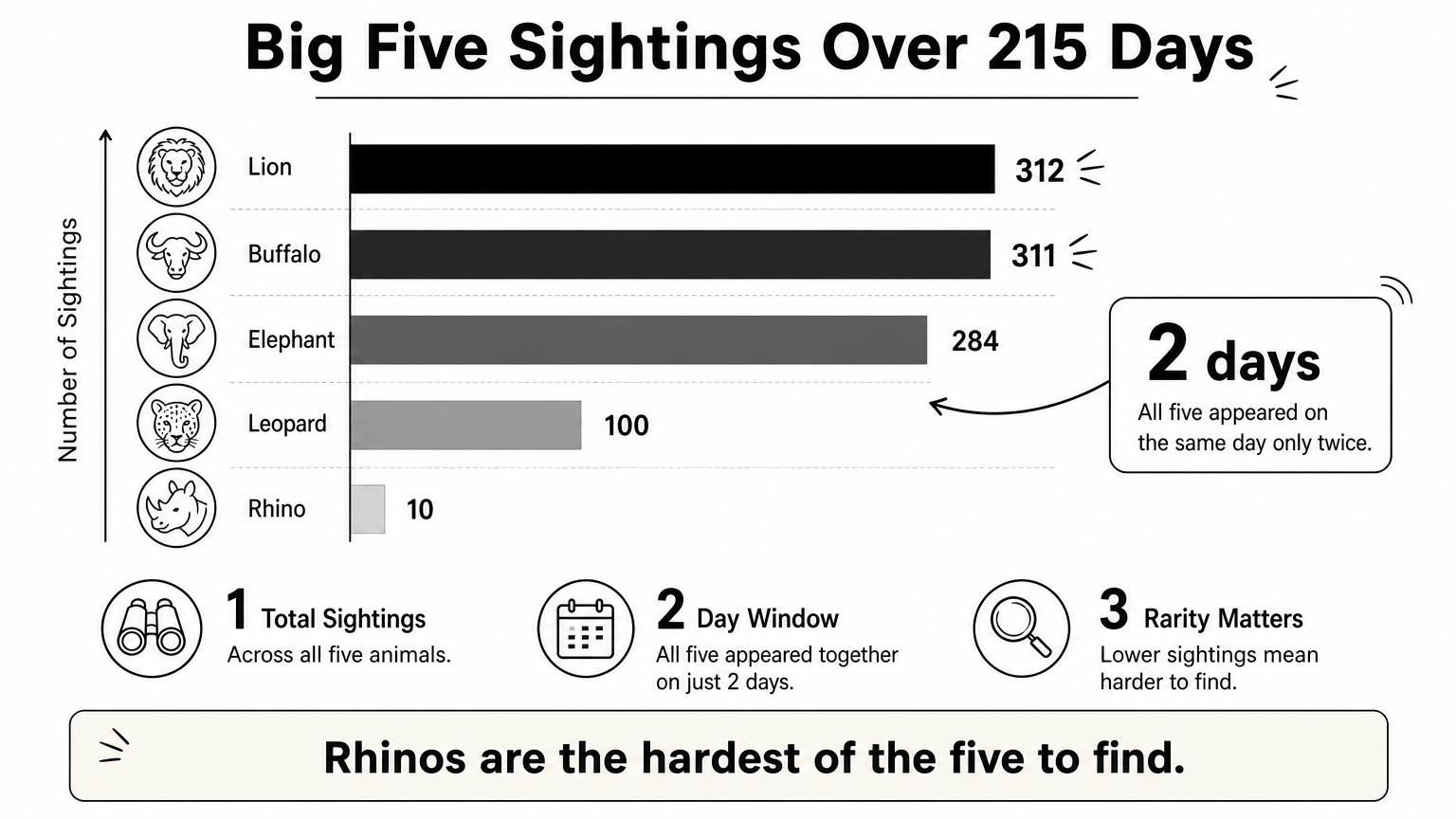
Rhinos are hardest, then leopards. One Tanzanian camp’s sighting sheets, covering 215 days from July 2018 to January 2019, show the gap clearly.
| Animal | Sightings logged | Where and when to look |
|---|---|---|
| Lion | 312 | Open plains, dawn and dusk |
| Buffalo | 311 | Grassland and water edges |
| Elephant | 284 | Rivers, swamps, waterholes |
| Leopard | 100 | Trees and riverside bush, early and late |
| Rhino | 10 | Dedicated sanctuaries and conservancies |
All five appeared on the same day only twice in those 215 days, under 1 percent. That is why the Big Five works best as a goal for the whole trip, not for a single day.
Rhinos are the hardest of the five to find, so choose your route around where they live.
Where to see the Big Five in Africa
Botswana, Kenya, Malawi, Namibia, South Africa, Tanzania and Zimbabwe can all offer the Big Five, but few single parks deliver all five in one stay. For most first-timers, Kenya and Tanzania are the easiest place to start, because the open landscapes make animals visible from the vehicle.
Best countries and parks for each animal
The table pairs each animal with the countries and areas where guides most often find it.
| Animal | Best countries | Best areas |
|---|---|---|
| Lion | Tanzania, Kenya | Serengeti, Masai Mara |
| Leopard | South Africa, Kenya, Tanzania, Botswana | Greater Kruger private reserves, Masai Mara, Serengeti, Moremi |
| Elephant | Botswana, Kenya, Namibia | Chobe, Amboseli, Namibia’s desert rivers |
| Rhino | Kenya, Namibia, South Africa | Lewa, Ol Pejeta, Etosha |
| Buffalo | Tanzania, Kenya, Botswana, South Africa | Serengeti, Masai Mara, Chobe, Kruger |
East Africa or southern Africa
East Africa’s grassy plains make it easy to see and photograph animals, especially at sunrise and sunset. The Serengeti and the Masai Mara are one continuous ecosystem across the border, and they hold large lion populations. The Serengeti alone is estimated to have 3,000 to 4,000 lions.
South Africa offers excellent infrastructure, but Kruger National Park has dense tree cover. Its popularity also means sightings of big cats can cause traffic jams, and you cannot drive off-road there. The private reserves bordering Kruger allow off-road driving and have fewer vehicles, which makes them the better bet for leopards.
A Kenyan route that covers all five
Kenya gives you a compact way to cover all five. The Masai Mara delivers lions, leopards, elephants and buffalo, but rhinos are scarce there, so a Mara-only trip can miss one. Lake Nakuru National Park and Ol Pejeta Conservancy are the rhino stops. Ol Pejeta is known for its Big Five and its black rhino conservation work, and Amboseli adds elephants with Mount Kilimanjaro behind them.
In Tanzania, the Serengeti and Ngorongoro Crater form a similar pairing, with Ngorongoro adding its small black rhino population. Pairing a cat-rich park with a rhino sanctuary is the pattern to copy anywhere.
How to plan a Big Five safari that works
Plan around the rhino first, allow at least four or five days, and travel in the dry season. Those three decisions improve your odds more than anything else, and none of them costs extra.
When to go and how long to stay
Dry months concentrate animals near rivers and waterholes, and the vegetation is thinner. In Kenya the long dry stretch runs roughly from June to October, and the Masai Mara wildebeest migration is viewed from July to September. Predators follow the herds, so the Mara is strong for cats in those months. Even so, no month guarantees sightings.
Length matters more than month. Three days in a single reserve gives a good chance at lions, elephants and buffalo. Four to five days across two or three parks is what makes a rhino sighting realistic.
What a Big Five safari costs
Two of our Kenya packages show how length changes the price. Both include park entry fees, a professional English-speaking driver-guide, accommodation, meals as listed and bottled water. Both exclude international flights, Kenya visa fees, travel insurance and tips.
| Trip | Parks | Listed price | Price per day |
|---|---|---|---|
| 3-Days Masai Mara, Lake Naivasha Budget Safari | Masai Mara, Lake Naivasha | $650 | about $217 |
| 5-Days Big Five Kenya Safari | Lake Naivasha, Lake Nakuru, Masai Mara | $1,460 (listed from $1,550, 6% off) | $292 |
The two extra days cost $810 more. They add Lake Nakuru, the rhino stop, plus a walking safari. Confirm whether a listed price covers one person or a whole vehicle before comparing quotes, and check the package page for current details.
What to ask before you book
Use these questions to compare any operator:
- Which stop on the itinerary is the rhino site?
- Does every guest get a window seat in a pop-up roof vehicle? We recommend no more than seven people per safari.
- How many years has the driver-guide worked these parks?
- Are park fees, meals and water included in the price?
- Is travel insurance arranged? We strongly recommend it.
A Big Five safari succeeds on route design and guide skill, not on luck.
No operator can promise a sighting, because the animals are wild. A good one can promise a route that gives you the best odds.
Start with the rhino, then build the route
A Big Five safari is a simple idea with a hunting history: five hard-to-find animals, now sought with cameras. Lions, buffalo and elephants are the easy part, leopards need patience, and rhinos decide whether you finish the list. Choose parks that complement each other, allow four or five days, and travel in the dry season.
If you want a route built around all five, plan your Big Five safari with Laxa Trails Safaris. Tell us your dates, group size and budget, and one of our Tour Consultants will come back with a quote and a custom itinerary.