Nairobi National Park: Wildlife, Fees, Hours and Safari
Nairobi National Park is a 117 km² wildlife park on the southern edge of Nairobi, about 7 to 10 km from the city center. Opened in 1946, it is Kenya’s first national park, and it lets you watch lions, rhinos, giraffes and buffalo with office towers on the skyline. It is open daily from 6:00 am to 6:00 pm, and a four-hour game drive covers its best areas. For most travelers it is worth the time, especially on a short stay or a layover.
A park this close to a capital raises practical questions. How do you get there, what does entry cost, which animals are realistic, and should you go guided or on your own? This article answers each one in the order you meet them while planning: why the park matters, how to plan the day, getting there, hours and seasons, fees, wildlife, safari options, how it compares with the Masai Mara, and how to visit responsibly.
Laxa Trails Safaris is a Kenya-based company founded in 2019 by a guide with more than 14 years in the field, and a Nairobi National Park half-day tour is one of the trips we run. We wrote this guide the way we brief guests before they book.
Why Nairobi National Park is worth visiting
Nairobi National Park is worth visiting when you want a real safari without committing days to it. It puts lions, rhinos, giraffes and buffalo within a short drive of the city center, and few capitals anywhere can say the same. If you have one free morning in Nairobi, this is the best use of it.
What makes the park different
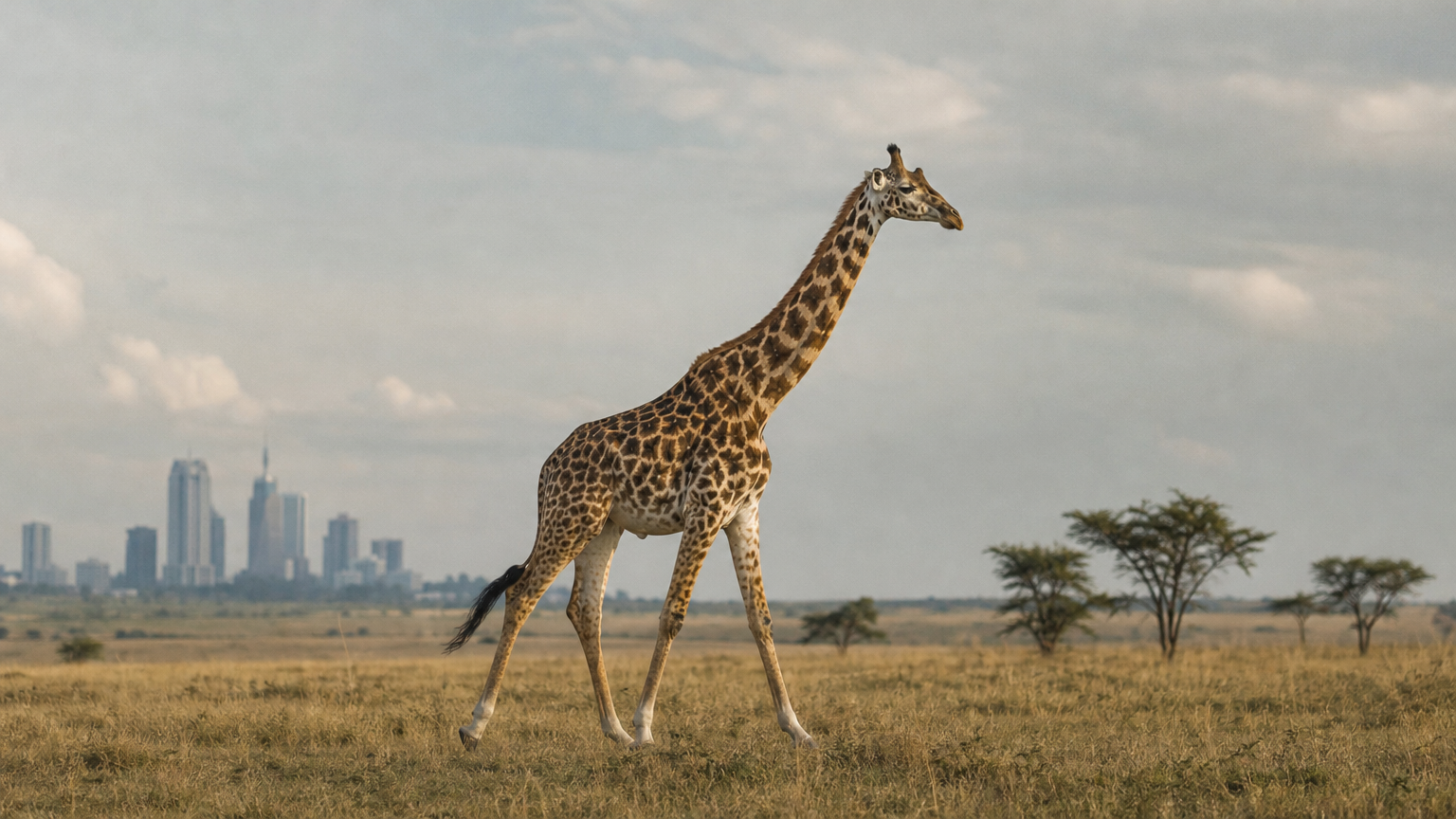
The park was gazetted in 1946 and is managed by the Kenya Wildlife Service (KWS). It is fenced on three sides, while the open southern boundary leads toward the Athi-Kapiti plains, so wildlife can still move in and out to the south. Airliners descend over the park toward the airport, which gives your photos a backdrop that no other safari offers.
Inside 117 km², you pass through open grassland, acacia bush, rocky ridges, forested river valleys and dams. Because these habitats sit close together, a four-hour game drive can cover most of them, and you spend your time watching animals instead of driving between zones. That compact layout is the park’s real advantage.
Nairobi National Park gives you a genuine savanna safari in the time it takes to eat a long breakfast and a late lunch.
Some visitors ask whether the park is a zoo. It is not. The animals are free-ranging, and the Nairobi Animal Orphanage beside the Main Gate is a separate KWS facility that cares for rescued animals.
Key facts at a glance
| Fact | Detail |
|---|---|
| Established | 1946, Kenya’s first national park |
| Size | About 117 km² (45 square miles) |
| Location | South of Nairobi, 7 to 10 km from the city center |
| Managed by | Kenya Wildlife Service (KWS) |
| Hours | 6:00 am to 6:00 pm, every day |
| Habitats | Grassland, acacia bush, rocky ridges, river valleys, dams, dry highland forest |
| Wildlife | More than 100 mammal species and roughly 500 recorded bird species |
| Not resident | Elephants |
Who the park suits, and who it does not
The park suits some travelers better than others. A quick check against your own plans will tell you whether to book it.
- Good fit: layovers, a first morning in Kenya, families with young children who tire on long drives, photographers who want wildlife with a skyline, and birders.
- Poor fit: travelers who want a remote wilderness feel, the wildebeest migration, or elephants in the open.
If you land in the second group, the Masai Mara and Amboseli serve you better, and a later section compares them. Many travelers do both, using Nairobi National Park as the easy first or last day around a longer trip.
How to plan a Nairobi National Park visit
Plan the visit around one early-morning game drive of about four hours, settle your park entry and transport the day before, and leave your hotel by 6:00 am. That frame handles most of the decisions. The steps and timeline below fill in the rest.
A five-step planning checklist
Work through these in order, and you will not be scrambling at the gate.
- Pick your day. Weekdays are calmer. Weekends and school holidays bring many local families and more vehicles.
- Choose guided or self-drive. A guide finds animals faster, and the later section on safari options weighs the two.
- Sort your entry category and payment. KWS fees depend on whether you are a non-resident, a Kenya resident or a citizen, and payment runs through eCitizen. A tour operator can handle it for you.
- Fix a start time. Be at the gate shortly after the 6:00 am opening, when cats and antelope are still active.
- Pack for a cool dawn and a warm late morning. The checklist below covers it.
Booking the day before is realistic in most seasons. Book further ahead for holiday periods or if you want a specific guide or a private vehicle.
A sample morning
The timings below fit a hotel in central Nairobi. Your own times will move with traffic and your hotel’s location.
| Time | What happens |
|---|---|
| 6:00 am | Pickup at your hotel |
| 6:30 am | Arrive at the gate, tickets and vehicle checked |
| 6:30 to 10:30 am | Game drive with stops at dams, viewpoints and the picnic area |
| 10:30 am | Exit the park |
| 11:00 am | Back at your hotel |
That is roughly five hours door to door, so a midday meeting or a late-afternoon flight is still possible. If you are catching an international flight the same day, keep a generous buffer, because Nairobi traffic is hard to predict.
What to bring
Nairobi sits at around 1,700 m, so dawn is cooler than most visitors expect. Layers matter more than anything else on this list. Bring a light jacket for the first hour, then strip down as the sun climbs.
Add binoculars, a hat, sunscreen, a camera with a long zoom (200 mm or more helps with cats and birds), and your own water bottle. Neutral clothing works better than bright colors. Keep a small bag for a snack, since the park has few places to buy food.
Leave early, dress in layers, and bring binoculars: those three choices decide how good your morning is.
How to get to Nairobi National Park
The main entrance is the Main Gate on Lang’ata Road, about 8 to 10 km from central Nairobi by road. Expect 20 to 45 minutes depending on traffic and where you start. The park is among the easiest wildlife areas in Africa to reach from an airport or a city hotel.
Gates and which one to use
Most visitors use the Main Gate, on the northwestern side along Lang’ata Road. The Nairobi Animal Orphanage and the Safari Walk sit beside it, which makes it the natural start if you want to combine them with a game drive.
The East Gate, on the northeastern side, is handier if you are coming from the Mombasa Road and airport side of town. There are other gates, such as Mbagathi, but their availability can vary, so confirm with KWS or your operator before you plan around one. If you book a guided tour, the driver picks the gate for you.
Pick the gate by where your hotel is: Main Gate from the west and center, East Gate from the airport side.
Ways to get there
You have four realistic options, and they differ in effort.
- Guided tour with hotel pickup. The simplest option. The vehicle, the driver-guide and the gate procedure are handled for you.
- Self-drive in a private or rented car. Allowed, and workable in the dry season. In or after heavy rain, a higher-clearance vehicle is far safer, because some tracks turn muddy.
- Taxi or ride-hailing to the gate. This gets you to the entrance, but a standard sedan is a poor game-drive vehicle, and you still need a way to move through the park.
- Public transport. It brings you to the gate area only. Game viewing needs a vehicle that can drive the park’s tracks, so this rarely works on its own.
The airport is close enough that a layover safari is practical. A morning game drive fits easily between an overnight arrival and an afternoon departure, as long as you leave a buffer.
Opening hours and the best time to visit
Nairobi National Park is open every day, including Sundays, from 6:00 am to 6:00 pm. Visitors cannot enter outside those hours, except on night game drives arranged with armed rangers. Plan to be through the gate soon after opening and back out before closing.
Best time of day
Early morning is best. Cats are more likely to be moving, light is soft for photos, and temperatures are comfortable. The first three hours after opening produce most of the park’s good sightings.
Late afternoon is a good second choice, with warm light and animals returning toward water. Midday is the weakest period, because animals rest in shade and the light is harsh. If you can only choose one slot, take the morning.
Best months
The park works in every month, but conditions change. This table sets the seasons side by side.
| Months | Conditions | What to expect |
|---|---|---|
| January to February | Dry and warm | Good visibility, firm tracks, strong game viewing |
| March to May | Long rains, wettest in April and May | Muddy tracks, green scenery, fewer vehicles, lush bird activity |
| June to October | Cool, dry season | Best visibility, animals gather near water, easiest driving |
| November to December | Short rains | Shorter showers, fresh green grass, good birding |
For the easiest driving and clearest sightings, aim for June to October, but a morning in any month is worth taking.
Rain often falls in the afternoon or evening, so a morning drive can still be clear in the wet months. Historically, wildebeest and zebra have moved into the park during the dry months, but wildebeest numbers have fallen sharply, so do not expect Masai Mara-style herds. The Mara is where you go for the migration.
Nairobi National Park entrance fees explained
KWS charges a per-person conservation fee that depends on your visitor category, plus a charge for your vehicle, and you pay through the eCitizen platform. The categories are non-resident, Kenya resident, Kenyan citizen and East African citizen, with lower rates for children and students. Because tariffs change, always confirm the current rate when you book.
How the fee structure works
Your category follows your status, not your nationality alone. Here is how it breaks down.
| Category | Who it covers | Note |
|---|---|---|
| Non-resident | Foreign visitors without Kenyan residency | The highest rate, and the one most tourists pay |
| Kenya resident | Foreigners living in Kenya with valid residency | A lower rate, usually requires proof of residency |
| Kenyan citizen | Citizens of Kenya | The lowest adult rate |
| East African citizen | Citizens of East African Community countries | A separate rate |
| Child or student | Under-age or eligible students | Reduced rates, check the age and ID rules |
You also pay a per-vehicle charge when you drive in. That fee applies whether you drive yourself or arrive in a tour vehicle, and tour operators fold it into the price.
Why published figures differ
KWS announced revised conservation fees on 1 October 2025, and the High Court suspended them the following day while a case from the tourism sector went ahead. Fee numbers quoted in older articles, brochures and booking pages can therefore disagree. Treat any number you read as a snapshot, and check the amount shown on eCitizen at the time you pay.
A worked budget for a family
Say you are a family of four, two adults and two children, visiting as non-residents. Your entry cost is:
- 2 adult non-resident tickets
- 2 child non-resident tickets
- 1 vehicle charge
Add transport (a rental car and fuel, or a tour price), a guide if you want one, lunch and tips. The ticket and vehicle rates come from eCitizen on the day, and everything else is your choice. On our own Nairobi National Park Day Tour, park fees are included in the price, along with the private vehicle, a professional guide, drinking water and hotel pickup and drop-off. Lunch and tips are excluded, as is any government-imposed increase in taxes or park fees.
Budget for the ticket, the vehicle charge and the transport separately, and check the live rate on eCitizen before you pay.
Wildlife you can see in the park
You can expect to see zebra, giraffe, buffalo, impala, gazelles, hippos, ostriches and many birds on almost any morning, and lions and rhinos are likely. Cheetahs are possible, and leopards are rare. The park lists more than 100 mammal species and roughly 500 recorded bird species.
Lions, cheetahs, leopards and rhinos
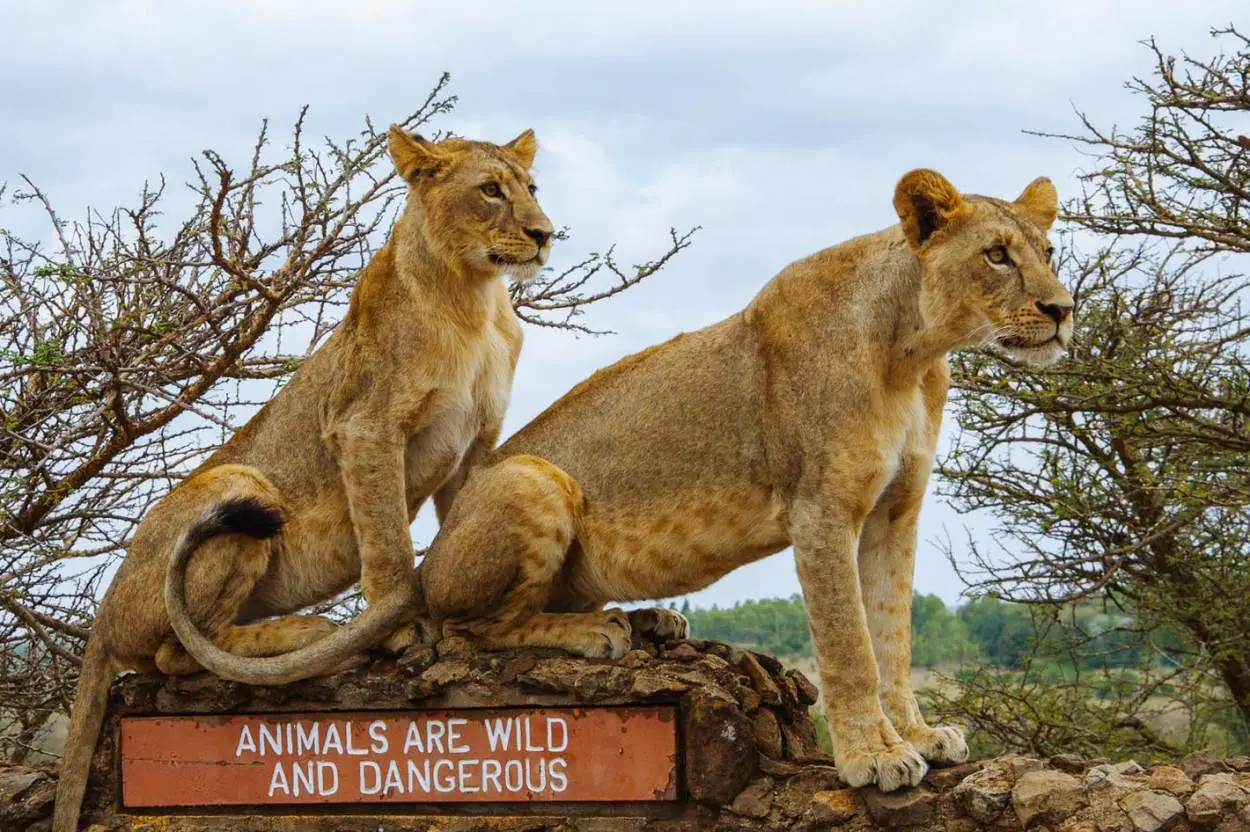
The park holds a few dozen lions, and they are the headline attraction. They are often seen resting in grass or near dams, and early morning gives you the best chance. Cheetahs favor the open plains, where they hunt by sight.
Rhinos are the park’s conservation signature. It protects both eastern black rhino and southern white rhino, and it has long served as a sanctuary and breeding area. Sightings are common, but no one can guarantee a rhino on a given drive, so treat any promise of a guaranteed sighting with caution.
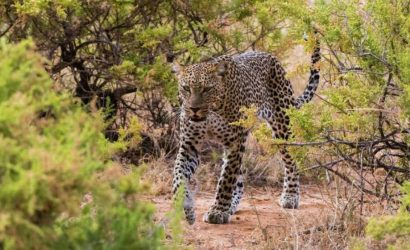
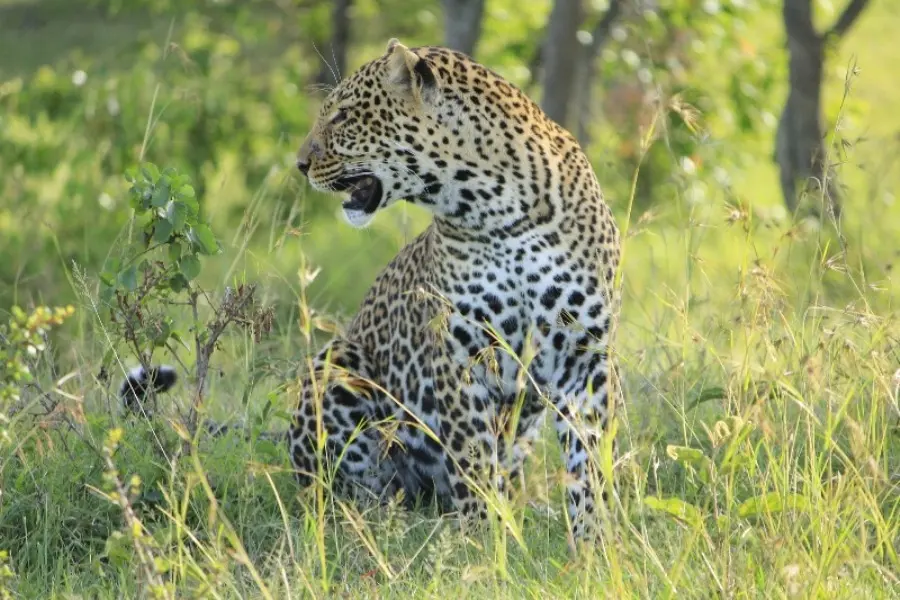
Leopards live here but stay hidden in forested valleys and rocky ground, and most visitors do not see one. A spotted hyena, a jackal or a baboon troop is a likelier extra.
Plains game, hippos and birds
Zebra, giraffe, buffalo, eland, hartebeest, impala, Thomson’s gazelle, warthog and waterbuck fill the grassland. Hippos and crocodiles live in the pools along the river valleys, and there are designated spots where you can leave the vehicle and look at them.
Birds are a strength. The park is recognized as an Important Bird Area, and the mix of grassland, woodland, dams and wetlands brings in raptors, waterbirds, ostriches, secretary birds and seasonal migrants. Bring binoculars even if you do not think of yourself as a birder.
What a four-hour drive usually delivers
These are realistic odds for a four-hour morning game drive with a competent guide, not promises.
| Animal | Typical chance |
|---|---|
| Zebra, giraffe, impala, gazelles, buffalo | Very likely |
| Hippo | Very likely at the pools |
| Rhino | Likely |
| Lion | Likely, not guaranteed |
| Cheetah | Possible |
| Leopard | Unlikely |
| Elephant | Not resident |
Elephants and the Big Five
Adult elephants do not roam free in the park. The Big Five question therefore has a clear answer: lion, leopard, buffalo and rhino live here, and elephants do not. Baby elephants are cared for at the Sheldrick elephant orphanage next to the park, which runs its own visiting arrangements, so plan it separately.
You can see four of the Big Five here, so you can reasonably expect most of them.
Nairobi National Park safari: guided or self-drive
A guided Nairobi National Park safari is the better choice for most first-time visitors, while self-drive suits travelers who know the park or have driven in African reserves before. A guide knows where the cats were last seen, reads behavior, and handles the gate. You pay for that knowledge and for not having to drive.
Comparing your options
| Option | Best for | Trade-off |
|---|---|---|
| Guided half-day tour | First safari, short stays, families | Fixed start time, less flexibility |
| Full-day guided drive | Photographers, wildlife-focused travelers | Longer day, higher cost |
| Self-drive | Experienced drivers, flexible schedules | You find the animals yourself, you navigate, wet roads are harder |
| Taxi to the gate | Not a complete option on its own | You still need a suitable vehicle inside |
Vehicle type matters. A land cruiser or a minibus with a pop-up roof lets you stand and photograph without leaning out of a window. On our safaris we use exactly those vehicles, and the driver-guide is a professional who speaks English.
What our Nairobi National Park Day Tour includes
Our half-day tour is built for short stays. Here are the facts.
- Duration: 4 to 5 hours, with a four-hour game drive
- Pickup: 6:00 am, with hotel pickup and drop-off
- Included: private vehicle, park fees, professional guide, drinking water
- Excluded: lunch, tips, personal items such as souvenirs, travel insurance and visa fees, and government-imposed increases in taxes or park fees
It is aimed at travelers who want to see most of what a longer safari offers in a single morning. It is not a replacement for the Mara, but it works as an introduction or a layover plan. Ask us if you want it customized.
When to go beyond a half day
Choose a longer drive if you are a keen photographer, you want time at dams and viewpoints, or you want a second chance at cats. A half day is enough for most people. If you want more days of wildlife, move on to a multi-day trip instead of stretching this park.
Pick the half-day guided drive if you have one morning, and choose a longer trip if you want more than the park can give in a day.
Nairobi National Park vs the Masai Mara
The Masai Mara is better for scale, wilderness and the wildebeest migration, and Nairobi National Park is better for convenience. They are not rivals so much as different tools. If you have a day, go to Nairobi National Park. If you have three or more, the Mara earns the trip.
How the parks compare
| Park | Area | Typical road time from Nairobi | Best for |
|---|---|---|---|
| Nairobi National Park | About 117 km² | 20 to 45 minutes | Short stays, rhinos, city-edge views |
| Lake Nakuru National Park | About 188 km² | About 3 hours | Rhinos, flamingos and lake scenery |
| Amboseli National Park | About 392 km² | 4 to 5 hours | Elephants with Kilimanjaro behind |
| Masai Mara National Reserve | About 1,510 km² | 5 to 6 hours | Big cats, Big Five, migration |
The Mara covers more than twelve times the area of Nairobi National Park. That scale gives you dense predator sightings and the Mara River crossings, which no half-day trip can match. The migration viewing window runs from July to September.
Which should you choose?
Use these rules of thumb.
- One free morning or a layover: Nairobi National Park.
- Three days: a Mara trip. Our 3-Days Masai Mara, Lake Naivasha Budget Safari is listed at $650 and can be customized.
- July to September with time to spare: our 4-Days Masai Mara Great Wildebeest Migration Safari includes a Mara River crossing visit and two full days of game viewing.
- A longer trip: open with a morning at Nairobi National Park on arrival, then head to the Mara.
Nairobi National Park is an excellent first morning of a Kenya trip, but it is not a substitute for the Mara.
Conservation pressures and visiting responsibly
Nairobi National Park is protected, but it is under pressure from the city around it. Fenced on three sides and open to the south, it depends on the dispersal land beyond its southern boundary. Responsible visitors help by paying fees, following the rules and choosing operators who respect the animals.
A park with a conservation story
At 117 km², the park is about 5.3% of the roughly 2,200 km² Athi-Kapiti ecosystem it belongs to. Land subdivision, fencing and settlement to the south shrink the corridors animals use. Published counts put wildebeest at nearly 30,000 in 1978 and only a few hundred in the latest census, which shows what the squeeze does.
The park also holds a landmark of Kenya’s anti-poaching history. In 1989, 12 tonnes of ivory were burned at the Ivory Burning Site, and in 2016 the country burned 105 tonnes of ivory and 1.35 tonnes of rhino horn there. The monument is worth a stop on a longer drive.
Coexistence work starts at the southern boundary. Lion Lights, flashing lights that keep lions away from livestock pens, were invented by Richard Turere, a Maasai boy from Kitengela, after lions from the park raided his family’s cattle.
Rules that protect you and the animals
Follow these rules on every drive.
- Stay in the vehicle except at designated picnic and viewing points
- Never feed or approach animals
- Keep to the posted speed limits and the marked tracks
- Take all litter out with you
- Keep your voice low near animals
- Remember that lions and buffalo roam freely
Your entry fee and a respectful drive both help keep the park running, so follow the rules and choose a guide who does.
Plan your Nairobi National Park morning
Nairobi National Park rewards an early start. It is open from 6:00 am to 6:00 pm, sits minutes from the city, and delivers lions, rhinos, giraffes and birds in a single half-day drive. Pay your fees through eCitizen at the current rate, go in the dry months for the easiest conditions, and pick a guided drive if it is your first safari.
If you want a driver-guide, a pop-up roof vehicle and hotel pickup handled for you, see our safari options and request a Nairobi National Park day tour. We can also customize it, or pair it with a longer trip to the Masai Mara.