Amboseli National Park Photos: 5 Iconic Scenes to Capture
The best Amboseli National Park photos come from five scenes: Kilimanjaro rising over the plains, elephant herds in the swamps, the dusty dry lake bed, wetland birds, and big cats on open grass. Choose the Kilimanjaro and elephant frames for the park’s signature image. Choose the lake bed if you shoot landscapes, the birds if you carry a long lens, and the cats if you want drama.
Search results for Amboseli images are mostly stock galleries and social posts. They show a pretty frame, but they rarely tell you where it was taken, at what hour, or in which season. In Amboseli those details decide everything, because the mountain hides in cloud, the lake is usually dry, and the herds move with the water.
This guide walks through each of the five scenes the way a safari guide would explain them. You will see what each image looks like, when it is possible, and how to shoot it yourself. Laxa Trails Safaris runs road safaris from Nairobi to Amboseli, so the timing and camera advice here comes from the practical side of getting guests into the right place at the right hour.
1. Kilimanjaro rising over the plains
What the photo shows
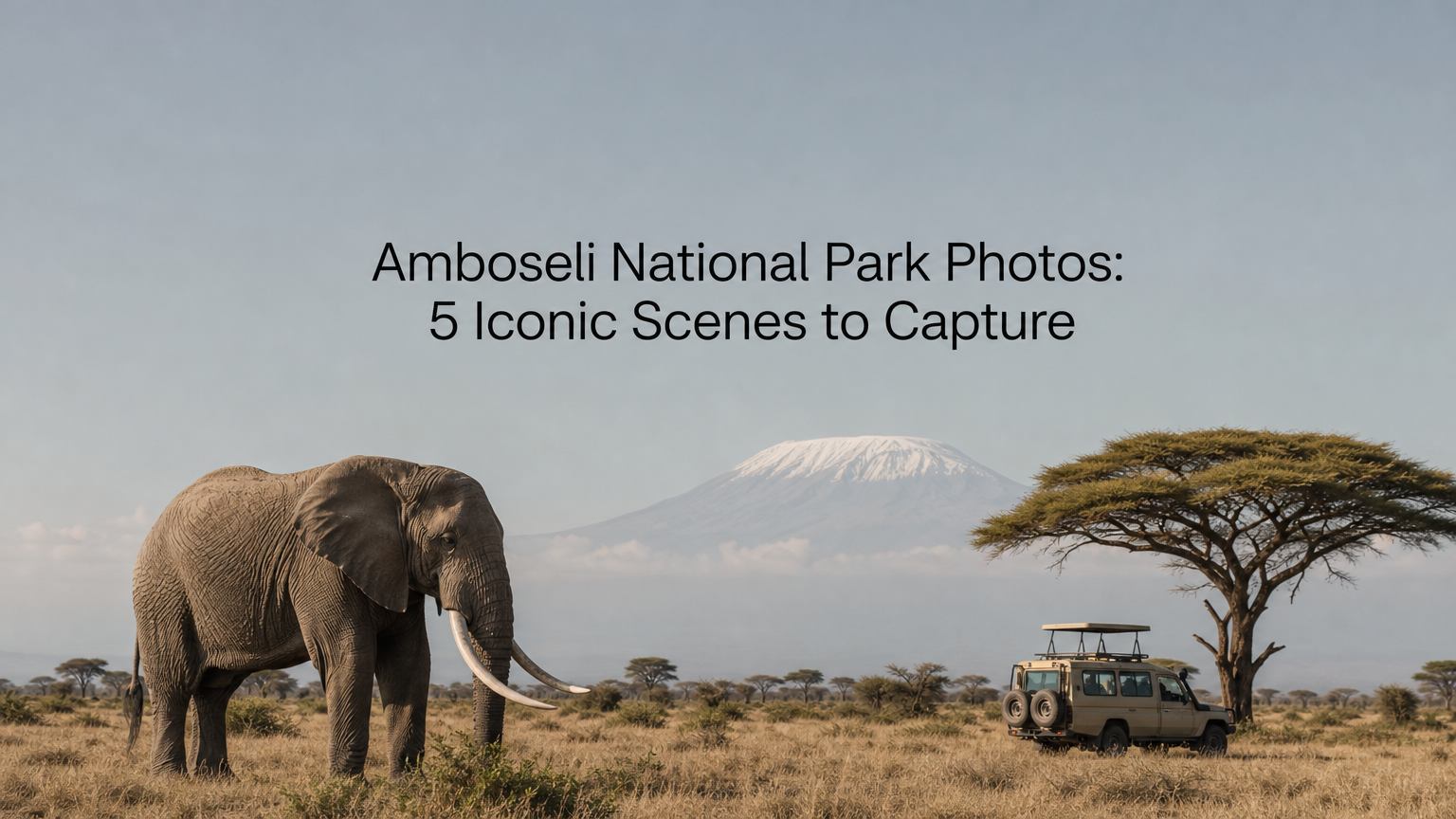
Amboseli’s best-known image is a flat, golden plain with Mount Kilimanjaro filling the horizon. The mountain stands 5,895 meters tall across the border in Tanzania. From Amboseli it looks like a lone giant with a snow cap, and that is why most Amboseli National Park images include it.
The mountain is often wrapped in cloud, so timing matters more than gear. The clearest views usually come at sunrise and in the last hour before sunset. Midday haze is common, and the summit sometimes appears just when you have stopped looking for it.
Kilimanjaro is a sunrise and sunset subject, so plan your days around those two windows.
How to get the shot
Treat the mountain as a backdrop and build the frame in front of it. A foreground subject such as an acacia, a grazing zebra or a walking elephant gives the image scale. A 3-day Amboseli trip puts you in the park for two sunrises, which doubles your odds of a clear summit.
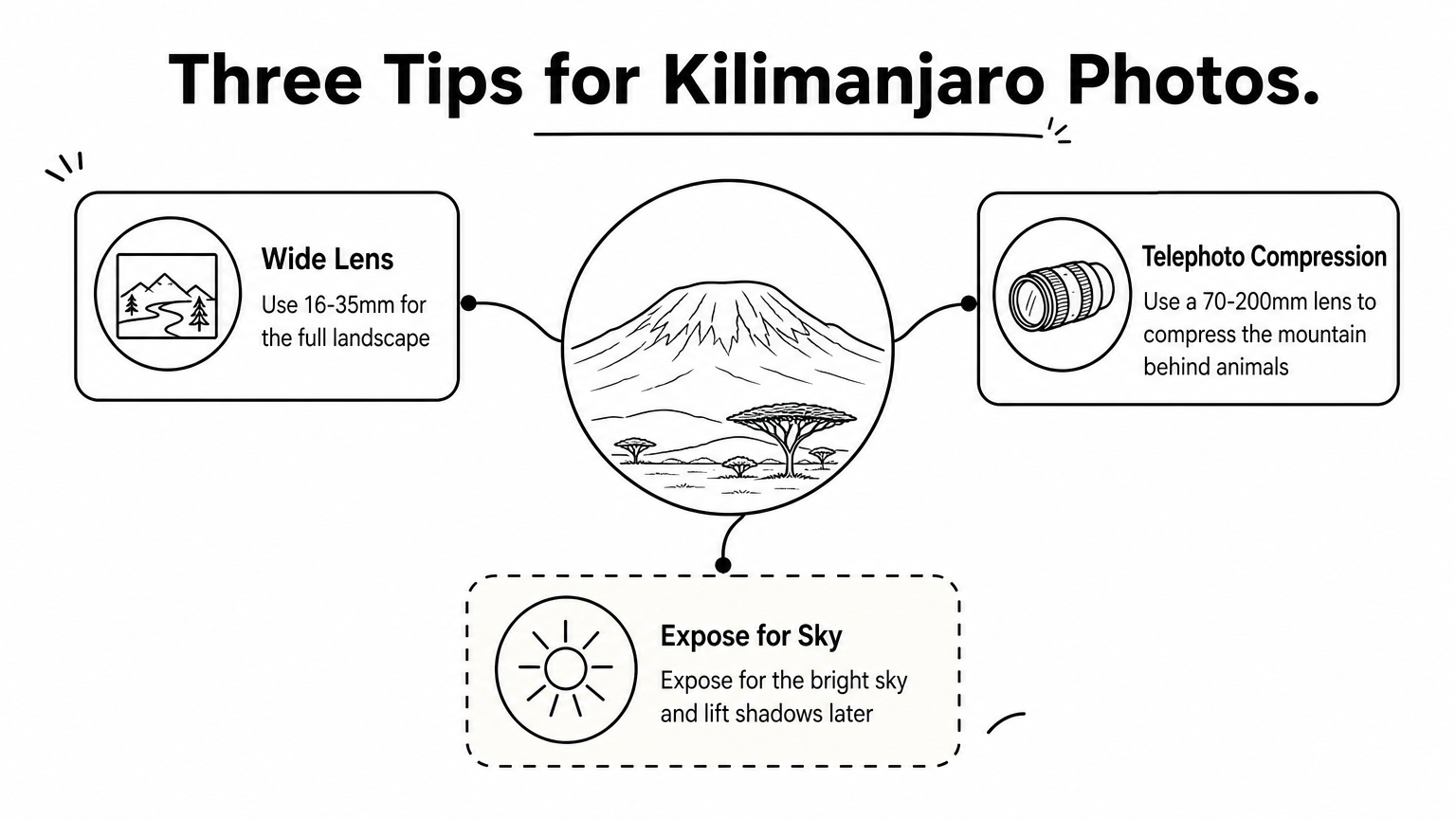
- Use a wide lens (16-35mm) for the full landscape.
- Use a 70-200mm lens to compress the mountain behind animals.
- Expose for the bright sky and lift the shadows later.
2. Elephant herds in the swamps
What the photo shows
Amboseli is famous for its elephants, and the swamps are where you photograph them best. Meltwater from Kilimanjaro seeps through volcanic rock and feeds permanent green wetlands in a dry landscape. Herds wade in to feed on reeds and sedges, and matriarchs lead calves of every size.
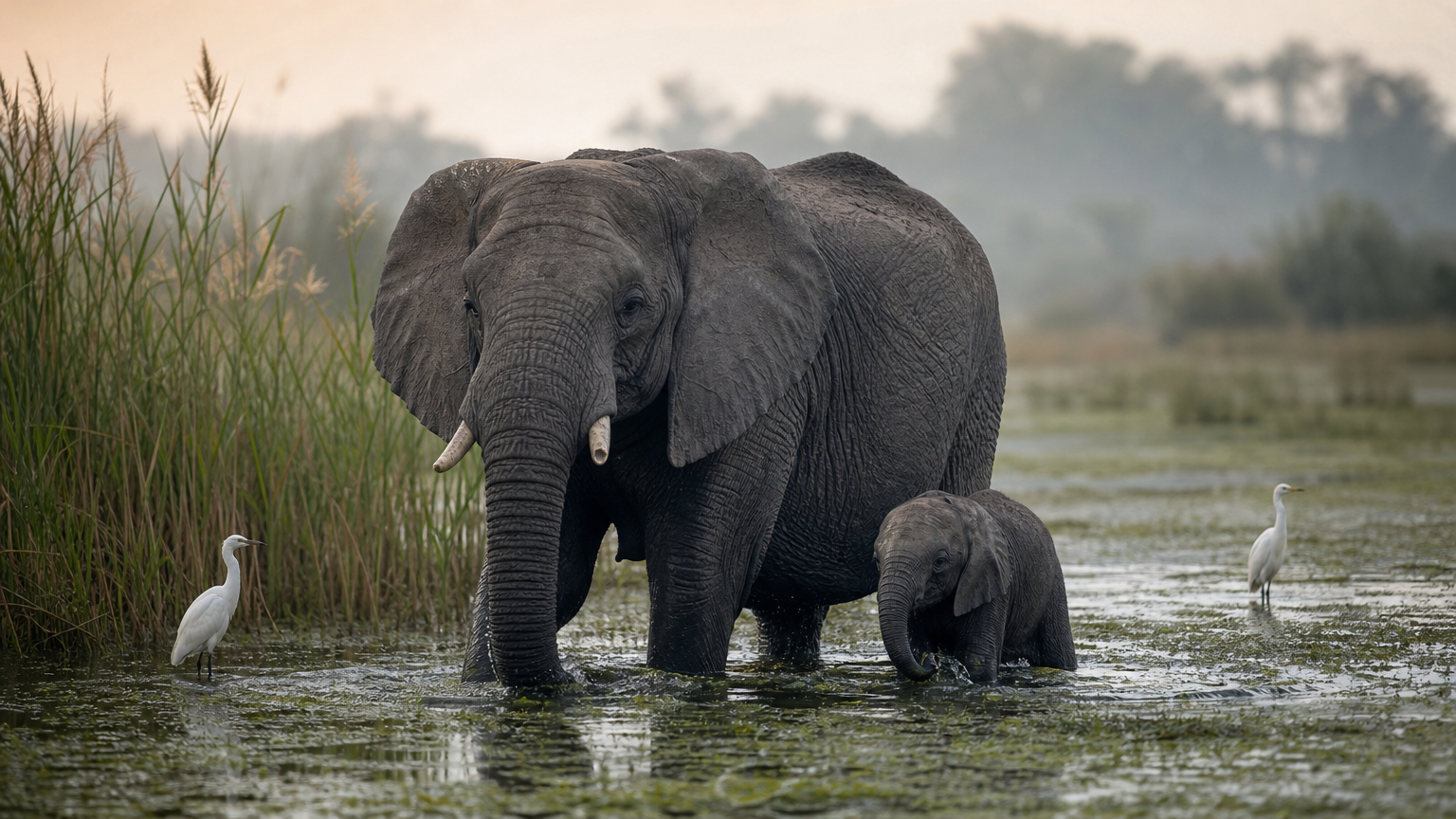
The park is also known for big-tusked bulls, which often walk alone or in small groups across the plains. Dry months bring the largest gatherings at the water. In the rains the herds spread out, and the same frame takes more searching.
The swamps hold the herds, and the herds make the picture, so spend your best light there.
How to get the shot
Ask your driver to park with the sun behind you and the engine off. Engine vibration softens long-lens shots. Aim for eye level with the animal, not down on its back, and wait for a calf or a raised trunk.
- Shutter speed of 1/1000 for walking elephants, 1/500 for slow feeding.
- A 100-400mm lens covers most herd distances.
- Shoot through the pop-up roof or an open window, resting the camera on a beanbag.
3. The dry lake bed and dust-colored light
What the photo shows
Lake Amboseli is a seasonal lake that stays dry for much of the year. What remains is a pale, cracked, alkaline plain where dust devils spin and heat shimmers. Elephants and zebra crossing it look small against the emptiness, and that scale is the appeal.
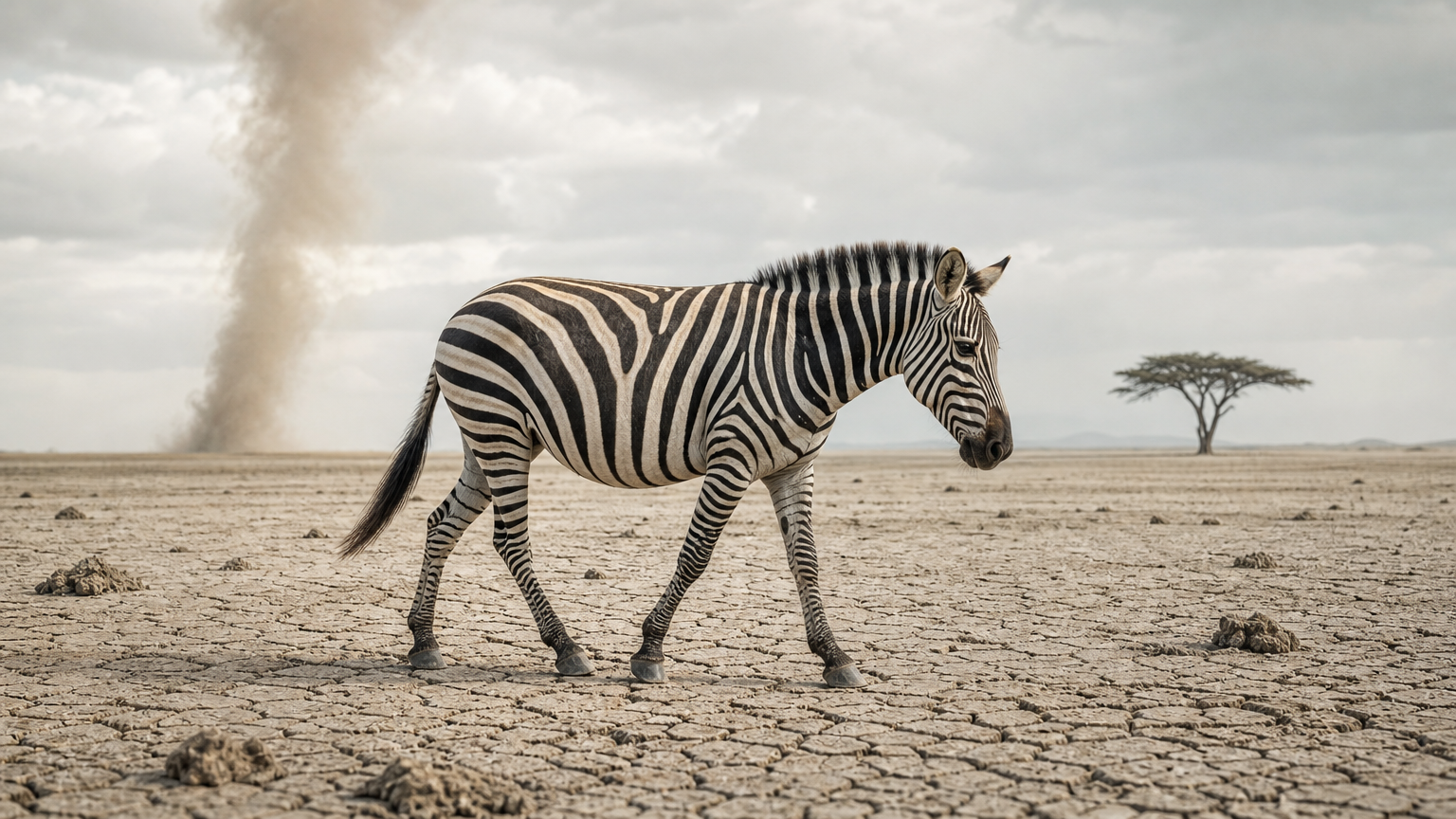
The frame changes with the weather. After heavy rain a shallow sheet of water can mirror the sky and the animals, though it never lasts long. A dry bed in low sun gives long shadows and warm dust.
Emptiness is the subject here, so leave room around the animals.
How to get the shot
Bright ground fools the camera meter. Add +0.7 to +1 exposure compensation so the pale surface does not turn gray. Backlit dust glows best in the first and last hour of light.
Dust also gets into gear. Keep the camera in a bag between drives and change lenses as little as possible. Carry a microfiber cloth and a blower.
- Use a wide lens for the bed and horizon.
- Use a telephoto lens for dust trails behind moving animals.
- Pick a shutter speed of 1/1000 or faster to freeze the dust.
4. Birds and wetland reflections
What the photo shows
The swamps and waterholes support more than 400 recorded bird species. Pelicans, egrets, grey crowned cranes and kingfishers share the water with hippos and buffalo. On calm mornings the shallows reflect the sky, and sometimes the mountain.
Migrant species add variety in the months when European birds winter in East Africa. Even if you are not a birder, a crane or egret against still water is a strong, quiet counterpoint to the dusty frames above.
Birds reward patience: pick one waterline and let the subjects come to you.
How to get the shot
Birds need reach, so bring a 400mm lens or longer if you can. Without one, shoot wider and include the habitat, such as reeds, water and sky. Early morning gives soft light and calm water.
- Rest the lens on a beanbag, since tripods are awkward in a vehicle.
- Use 1/1600 or faster for birds in flight.
- Focus on the eye and shoot short bursts.
5. Lions, cheetahs and plains game
What the photo shows
Open grassland makes big cats easy to spot in Amboseli. Lions rest in the shade and cheetahs scan from low mounds, with zebra, wildebeest, giraffe and buffalo grazing nearby. Spotted hyenas and jackals add variety at dawn.
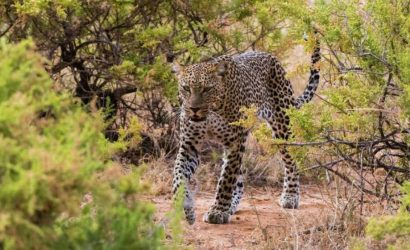
Be realistic about the Big Five. Elephant and buffalo are dependable here and lions appear regularly. Leopards are rare and rhinos are not a dependable sighting, so use Amboseli for elephants and landscapes. For the full set, combine it with the Masai Mara, as our 7-day itinerary does.
Amboseli gives you the mountain and the elephants, and the Mara gives you the full Big Five.
How to get the shot
Cats are often resting, so the shot is patience plus a long lens. Wait for a yawn, a stare or a cub’s move. Open ground means long distances, so a 200-500mm range helps.
- Keep your shutter speed at 1/1000 or faster for cheetahs and running prey.
- Shoot at the animal’s eye level from the window or roof.
- Pair a close portrait with a wide frame showing Kilimanjaro behind.
Plan your own Amboseli shots
Five scenes cover the park: Kilimanjaro on the horizon, elephants in the swamps, the dry lake bed, wetland birds, and cats on the plains. Light at the edges of the day, a long lens, and a driver who knows where to park will do more for your pictures than any camera upgrade.
If you want to take these images yourself, the 3-day Amboseli safari from Laxa Trails Safaris costs $715 (down from $815). It covers game drives, full board accommodation and park entrance fees, with a professional English-speaking driver-guide.