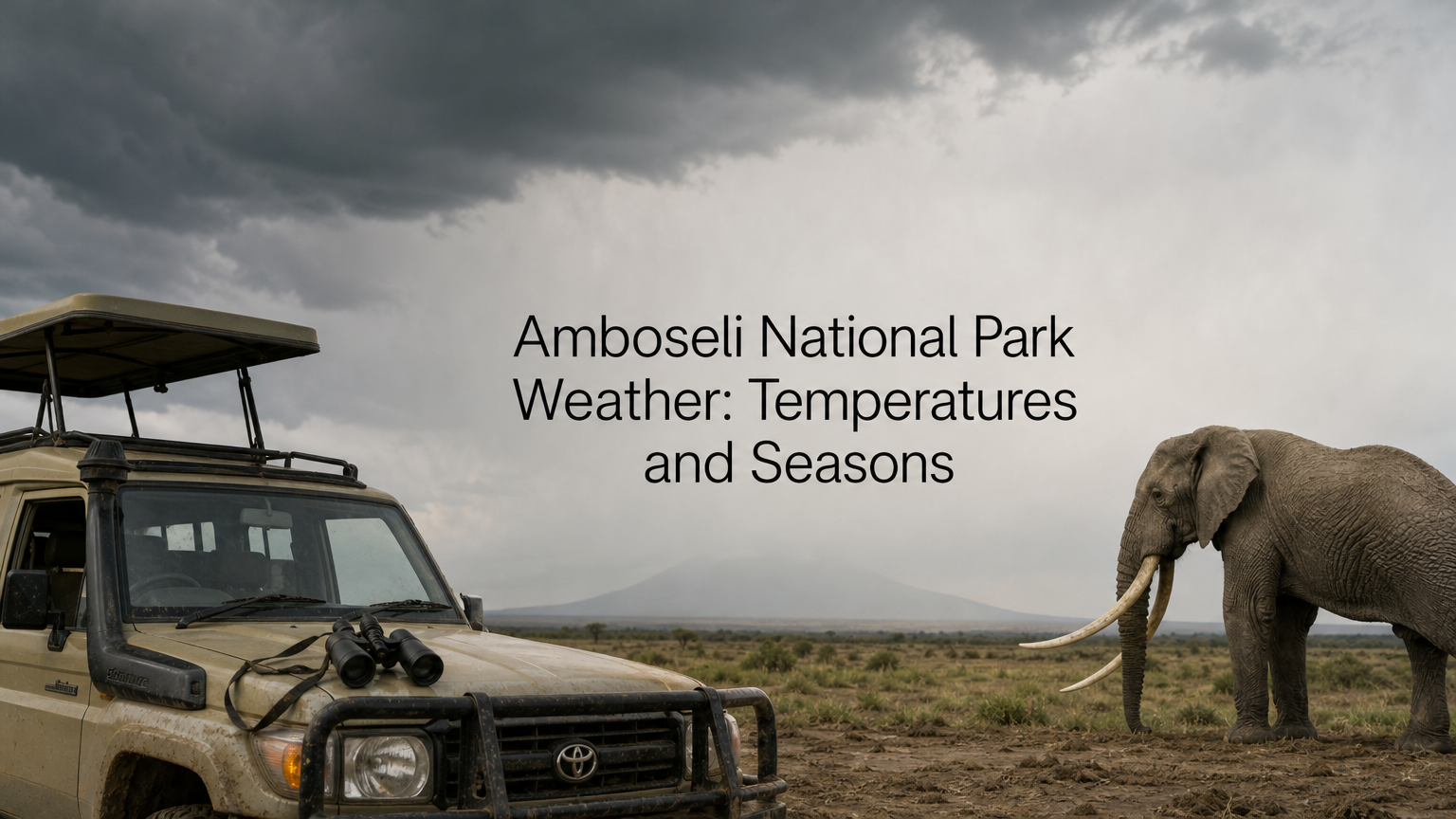
Amboseli National Park Weather: Temperatures and Seasons
Amboseli National Park weather is hot, dry and semi-arid all year. Daytime highs run from 25 to 31°C (77 to 88°F), and nights cool to 13 to 17°C (55 to 63°F). Two rainy seasons interrupt the dry spells: the long rains from mid-March to mid-May, and the short rains from late October or November to mid-December. The clearest, driest months are June to October.
Climate in the park comes down to one thing: the park sits in the rain shadow of Mount Kilimanjaro. Rain arrives as short, heavy showers, and the dry months are dusty and bright. That pattern affects what wildlife you see, how the roads drive, and what you should put in your bag.
This guide explains why the weather matters, how to pick your month from the monthly figures, how to read a forecast before you fly, and what to pack. Laxa Trails Safaris was founded in 2019 by a guide with more than 14 years in the field, and these are the weather questions that matter most when you plan an Amboseli trip.
Why Amboseli’s weather matters for your safari
Weather in Amboseli decides what you see, how comfortable you are and how easily the vehicle moves. The park is semi-arid, so the difference between a dry month and a wet one is large.
A rain shadow climate
Amboseli lies northwest of Kilimanjaro at roughly 1,100 to 1,170 meters (about 3,700 to 3,800 feet). The mountain blocks much of the moisture, so the park stays semi-arid with high evaporation. Rain tends to fall as short, heavy afternoon showers, not all-day drizzle.

Sources disagree on annual rainfall. Some put it near 300 mm, while monthly climate charts add up to around 650 mm. Rain here is patchy and varies from year to year, so treat every figure as an average. Seasons also start and end less predictably than they used to.
In Amboseli, the question is not whether it rains but whether the rains line up with your dates.
What changes between dry and wet months
The season affects five things you will notice on safari:
- Wildlife: In the dry months, animals gather at rivers, swamps and water holes, so they are easier to find. Elephants live in the park all year. In the wet months the grass grows tall and spotting gets harder, but migratory birds arrive.
- Roads: Tracks deteriorate in April and May, and drives take longer.
- Views: Kilimanjaro is usually clearest early in the morning and late in the day, whatever the season.
- Comfort: June to August is the coolest stretch. February and March are the hottest.
- Prices: July to October is peak season, and April to mid-June, excluding Easter, is usually the cheapest.
How to choose your month using the climate data
Choose your month by deciding what matters most: wildlife viewing, price or comfort. The table shows typical long-term averages for each month.
Monthly temperatures and rainfall
| Month | Low / high | Rainfall | What to expect |
|---|---|---|---|
| January | 16 / 29°C (61 / 84°F) | 49 mm | Drier gap between rains |
| February | 17 / 30°C (63 / 86°F) | 47 mm | Hottest, mostly dry |
| March | 17 / 31°C (63 / 88°F) | 81 mm | Long rains start mid-month |
| April | 16 / 30°C (61 / 86°F) | 142 mm | Wettest month, muddy roads |
| May | 15 / 29°C (59 / 84°F) | 67 mm | Rains fade |
| June | 13 / 27°C (55 / 81°F) | 12 mm | Dry and cooler |
| July | 13 / 25°C (55 / 77°F) | 4 mm | Driest, coolest |
| August | 14 / 26°C (57 / 79°F) | 5 mm | Dry, warming up |
| September | 15 / 27°C (59 / 81°F) | 7 mm | Dry, dusty |
| October | 16 / 28°C (61 / 82°F) | 31 mm | Hot, first showers |
| November | 16 / 28°C (61 / 82°F) | 115 mm | Short rains peak |
| December | 16 / 28°C (61 / 82°F) | 87 mm | Short rains ease |
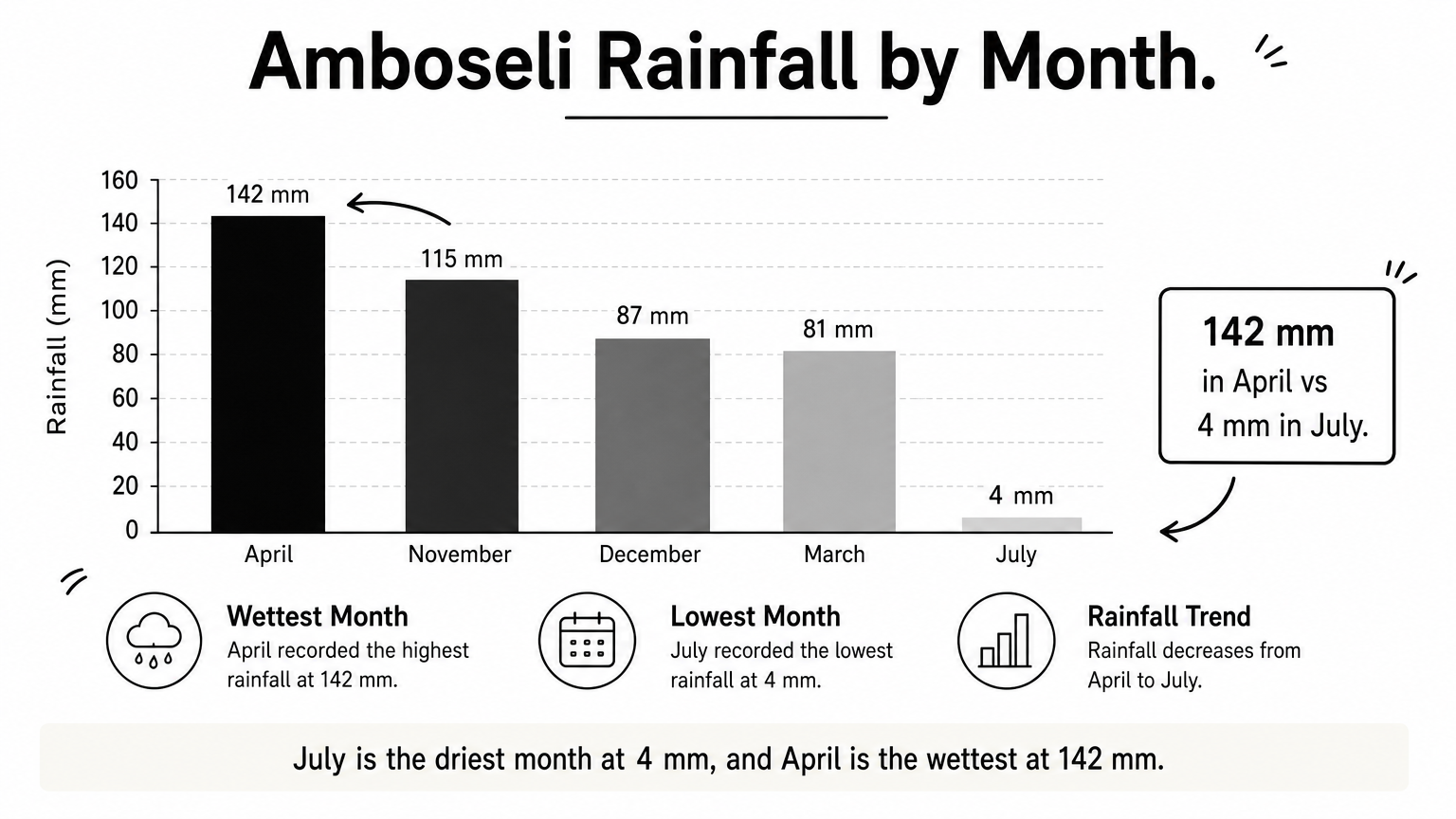
The pattern is simple. July is the driest month at 4 mm, and April is the wettest at 142 mm. Temperatures barely move, with highs between 25 and 31°C all year.
Matching the month to your priority
Match your priority to the table like this:
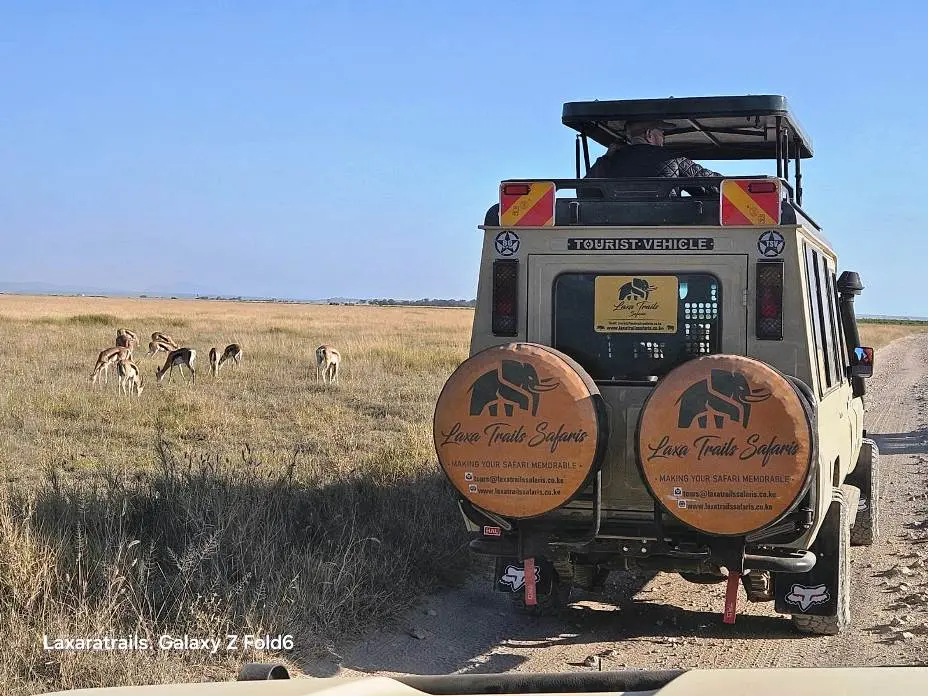
- Best wildlife viewing: Go from June to October. Little rain falls, and animals concentrate near water.
- Fewer crowds and lower prices: Try April to mid-June or the short rains in November and December. Expect afternoon showers and some mud.
- Birdwatching and green scenery: Choose the wet months, and accept slower driving.
- Warm, mostly dry weather: January and February often work, though the start and end of this gap are never certain.
Here is a worked example. Say you have three days. In July you get about 4 mm of rain, highs near 25°C and lows near 13°C, which means cool game drives at dawn and dry tracks. In April you get about 142 mm of rain and warmer mornings, with showers more likely in the afternoon. Our 3 Days Amboseli National Park Safari runs by road from Nairobi for 2 nights and is listed at $715, down from $815. Ask a tour consultant for a quote for your exact dates, because season affects availability and cost.
Pick July for the easiest wildlife viewing, April for the lowest crowds, and expect the weather to differ in each.
How to read the Amboseli forecast
A forecast is useful in the final week or two before your trip, while monthly averages do the work before that. Weather services publish 10-day and 14-day outlooks for Amboseli, but accuracy falls quickly beyond about a week.
What a forecast can and cannot tell you
In the rainy months, showers are patchy and often arrive in the afternoon. A "40% chance of showers" usually means a downpour somewhere nearby, not a washed-out day. Morning drives often stay dry even when the afternoon is forecast wet. In the dry months, the forecast rarely changes your plans, since rain is close to absent.
Look up Amboseli itself, not Nairobi. Nairobi sits higher and is cooler, so its forecast will mislead you about temperatures in the park.
A simple routine before you travel
- Two weeks out: Check the Amboseli outlook and use it to settle your packing list.
- Three days out: Look for storms and tell your driver-guide, who knows how the tracks handle rain.
- Each evening: Check the next morning’s low temperature and wind so you dress correctly for the early drive.
- In the dry season: Skip the daily checks and expect dust and sun.
Averages decide when you book. Forecasts decide what goes in your bag.
What to pack for Amboseli’s weather
Pack layers. Mornings start at 13 to 17°C, afternoons reach the high 20s, and the sun is strong all day.
Layers and clothing
| Item | Why you need it |
|---|---|
| Fleece or light jacket | Early drives are cold, especially June to September |
| Light long sleeves and trousers | Sun and dust protection in the afternoon |
| Hat and sunglasses | Strong sun on open plains |
| Light rain jacket | Needed March to May and November to December |
| Closed, comfortable shoes | Dusty or muddy ground |
| Scarf or buff | Keeps dust off your face on dry-season drives |
Gear for dust, sun and rain
Our vehicles are land cruiser jeeps or minibuses with a pop-up roof, which opens the view but also lets in sun and dust. Sunscreen and a dust cover for your camera matter more than most people expect. Bring a small waterproof bag for electronics in the rainy months. Binoculars help in every season, particularly when the grass is high.
Three layers, a hat and a dust cover for the camera cover most of what Amboseli’s weather throws at you.
Plan your trip around the seasons
Amboseli is hot, dry and bright, with the driest weather from June to October and rain concentrated in April and in November. Pick your month by priority, check the forecast in the last week or two, and pack layers for cold mornings and strong sun.
If you want help matching your dates to the weather, ask Laxa Trails Safaris for an Amboseli itinerary and quote. A tour consultant will get back to you with the details.